Select Page

What These Medical Journals Don’t Reveal: Top Doctors’ Ties to Industry
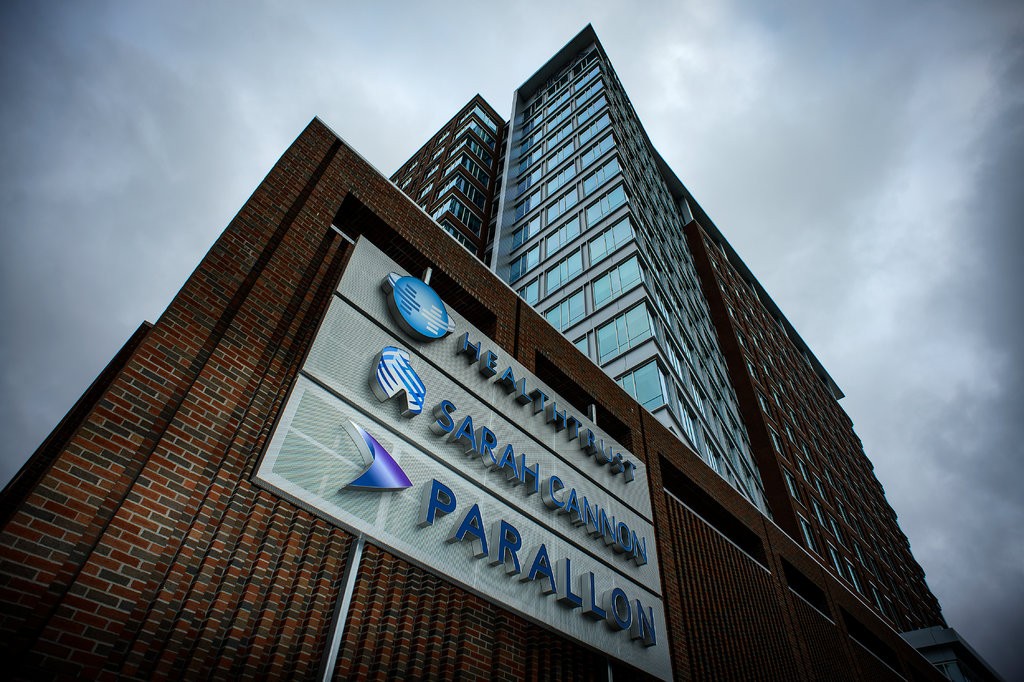
The Sarah Cannon Research Institute, based in Nashville, received nearly $8 million in payments from drug companies on behalf of its president for clinical operations, Dr. Howard Burris, largely for research work. Dozens of his articles published in prestigious medical journals did not include the required disclosures of those payments and relationships. – William DeShazer for The New York Times


“Calls for transparency stem from concerns that researchers’ ties to the health and drug industries increase the odds they will, consciously or not, skew results to favor the companies with whom they do business.”

At this point in the medical news stream, this is a big Duh, to anyone with eyes open, who has read about this subject in the last oh, I dunno, twenty years, It is why the onus of responsibility, and making an intelligently calculated risk decision of whether to take (especially newly marketed) medication, or agree to any procedure, or have surgery, is on us, the patient.
Trust your doctor, if you can, but, if you don’t know the bigger reality in the business of healthcare, you could suffer needlessly.


By Charles Ornstein and Katie Thomas, Via NYTimes
Dec. 8, 2018

This article was reported and written in collaboration with ProPublica, the nonprofit journalism organization.

One is dean of Yale’s medical school. Another is the director of a cancer center in Texas. A third is the next president of the most prominent society of cancer doctors.

These leading medical figures are among dozens of doctors who have failed in recent years to report their financial relationships with pharmaceutical and health care companies when their studies are published in medical journals, according to a review by The New York Times and ProPublica and data from other recent research.

Dr. Howard A. “Skip” Burris III, the president-elect of the American Society of Clinical Oncology, for instance, declared that he had no conflicts of interest in more than 50 journal articles in recent years, including in the prestigious New England Journal of Medicine.

However, drug companies have paid his employer nearly $114,000 for consulting and speaking, and nearly $8 million for his research during the period for which disclosure was required. His omissions extended to the Journal of Clinical Oncology, which is published by the group he will lead.

In addition to the widespread lapses by doctors, the review by The Times and ProPublica found that journals themselves often gave confusing advice and did not routinely vet disclosures by researchers, although many relationships could have been easily detected on a federal database.

Medical journals, which are the main conduit for communicating the latest scientific discoveries to the public, often have an interdependent relationship with the researchers who publish in their pages. Reporting a study in a leading journal can heighten their profile — not to mention that of the drug or other product being tested. And journals enhance their cachet by publishing exclusive, breakthrough studies by acclaimed researchers.

In all, the reporting system still appears to have many of the same flaws that the Institute of Medicine identified nearly a decade ago when it recommended fundamental changes in how conflicts of interest are reported. Those have yet to happen.

“The system is broken,” said Dr. Mehraneh Dorna Jafari, an assistant professor of surgery at the University of California, Irvine, School of Medicine. She and her colleagues published a study in August that found that, of the 100 doctors who received the most compensation from device makers in 2015, conflicts were disclosed in only 37 percent of the articles published in the next year. “The journals aren’t checking and the rules are different for every single thing.”

Calls for transparency stem from concerns that researchers’ ties to the health and drug industries increase the odds they will, consciously or not, skew results to favor the companies with whom they do business. Studies have found that industry-sponsored research tends to be more positive than research financed by other sources. And that in turn can sway which treatments become available to patients. There is no indication that the research done by Dr. Burris and the other doctors with incomplete disclosures was manipulated or falsified.

Journal editors say they are introducing changes that will better standardize disclosures and reduce errors. But some have also argued that since most researchers follow the rules, stringent new requirements would be costly and unnecessary.

The issue has gained traction since September, when Dr. José Baselga, who was the chief medical officer of Memorial Sloan Kettering Cancer Center in New York, resigned after The Times and ProPublica reported that he had not revealed his industry ties in dozens of journal articles.

[Read more about doctors at Memorial Sloan Kettering and their financial relationships with companies.]
Dr. Burris, president of clinical operations and chief medical officer at the Sarah Cannon Research Institute in Nashville, referred questions about the payments to his employer. It defended him, saying the payments were made to the institution, although The New England Journal of Medicine requires disclosure of all such payments.

Other prominent researchers who have submitted erroneous disclosures include Dr. Robert J. Alpern, the dean of the Yale School of Medicine, who failed to disclose in a 2017 journal article about an experimental treatment developed by Tricida that he served on that company’s board of directors and owned its stock. Tricida, which is developing therapies for chronic kidney disease, had financed the clinical trial that was the subject of the article.

Dr. Alpern said in an email that he initially believed that his disclosure — that he had been a consultant for Tricida — was adequate. However, “because of concerns recently raised about disclosures,” he said he notified the publication, The Clinical Journal of the American Society of Nephrology, in October that he also served on Tricida’s board and had stock holdings in the company.

The journal initially told Dr. Alpern that his disclosure was sufficient. But after The Times and ProPublica contacted the publication in November, it said it would correct the article.
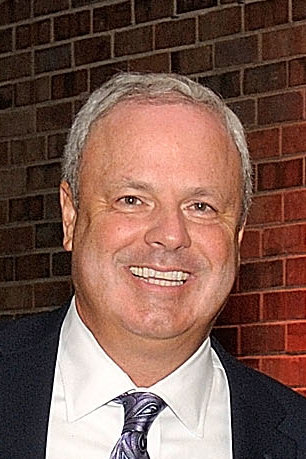
Dr. Howard A. Burris III

“The failure to disclose this information at the time of peer review is a violation of our policy,” Dr. Rajnish Mehrotra, the journal’s editor in chief, said in an email.

He later said that an additional inquiry had revealed that all 12 of the article’s authors had submitted incomplete disclosures, and that the journal planned to refer the matter to the ethics committee of the American Society of Nephrology. Dr. Mehrotra also said that the journal had decided to conduct an audit of some recent articles to evaluate the broader issue.

Dr. Carlos L. Arteaga, the director of the Harold C. Simmons Comprehensive Cancer Center in Dallas, said he had “nothing to disclose” as an author of a 2016 study published in The New England Journal of Medicine of the breast cancer drug Kisqali, made by Novartis. But Dr. Arteaga had received more than $50,000 from drug companies in the three-year disclosure period, including more than $14,000 from Novartis.

In an email, Dr. Arteaga described the omission as an “inexcusable oversight and error on my part,” and subsequently submitted a correction.

Dr. Jeffrey R. Botkin, an associate vice president for research at the University of Utah, recently argued in JAMA, a leading medical journal, that researchers should face misconduct charges when they do not disclose their relationships with interested companies. “They really are falsifying the information that others rely on to assess that research,” he said. “Money is a very powerful influencer, and people’s opinions become subtly biased by that financial relationship.”

But Dr. Howard C. Bauchner, the editor in chief of JAMA, said that verifying each author’s disclosures would not be worth the time or effort. “The vast majority of authors are honest and do want to fulfill their obligations to tell readers and editors what their conflicts of interest could be,” he said in an interview.

As the debate continues, an influential group, the International Committee of Medical Journal Editors, is considering a policy that would refer researchers who commit major disclosure errors to their institutions for possible charges of research misconduct.

Concerns about the influence of drug companies on medical research have persisted for decades. Senator Estes Kefauver held hearings on the issue in 1959, and there was another surge of concern in the 2000s after a series of scandals in which prominent doctors failed to reveal their industry relationships.

Medical journals and professional societies strengthened their requirements. The drug industry restricted how it compensates doctors, prohibiting gifts like tickets to sporting events or luxury trips — although evidence of kickbacks and corruption continues to surface in criminal prosecutions. And a 2010 federal law required pharmaceutical and device makers to publicly report their payments to physicians.
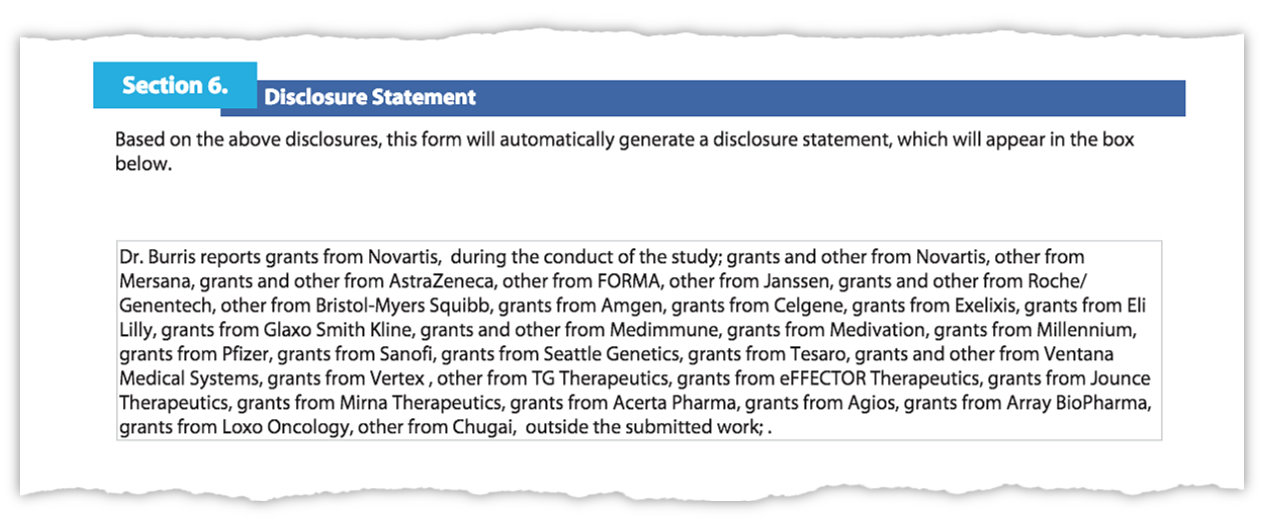
Questioned about omissions on his disclosure forms accompanying research articles, Dr. Burris submitted new disclosures to the New England Journal of Medicine showing his ties to many drug and health care companies.

Despite these changes, the system for disclosing conflicts remains fragmented and weakly enforced. Medical journals and professional societies have a variety of guidelines about what types of relationships must be reported, often leaving it up to the researcher to decide what is relevant. There are few repercussions — beyond a correction — for those who fail to follow the rules.

For example, the American Association for Cancer Research has warned authors that they face a three-year ban if they are found to have omitted a potential conflict. But the group’s policy on conflicts of interest contains no mention of such a penalty, and it said no author had ever been barred. Dr. Baselga’s failure to disclose his industry relationships extended to the association’s journal, Cancer Discovery, for which he serves as one of two editors in chief. The association said it is investigating Dr. Baselga’s actions.

Most authors do seem to disclose their ties to corporate interests. About two-thirds of the authors on the Kisqali study, for example, reported relationships with companies, including Novartis. But the researchers who did not included Dr. Arteaga, Dr. Burris and Dr. Denise A. Yardley, a senior investigator who works with Dr. Burris at Sarah Cannon.

The Tennessee-based research center received more than $105,000 in fees for consulting, speaking and other services on Dr. Yardley’s behalf in the three-year period in which she declared no conflicts.

The Sarah Cannon institute said it switched over a year ago to a “universal disclosure” practice promoted by ASCO, the cancer group that Dr. Burris will lead. That requires doctors to disclose all payments, including those made to their institutions.

“We believe we adhere to the highest ethical standards in the industry by not allowing personal compensation to be paid to our leadership physicians,” the center said.

ASCO said it would post corrections to Dr. Burris’s disclosures in The Journal of Clinical Oncology for the past four years. The group said that in the fall of 2017 — as Dr. Burris was seeking a leadership role in the organization — it began working with him to disclose all his company relationships, including indirect payments. Dr. Burris will become president in June 2019.

“Disclosure systems and processes in medicine are not perfect yet, and neither are ASCO’s,” the group said in an email.

Dr. Burris, Dr. Yardley and Dr. Arteaga submitted updated disclosures to The New England Journal of Medicine, which posted them on Thursday.
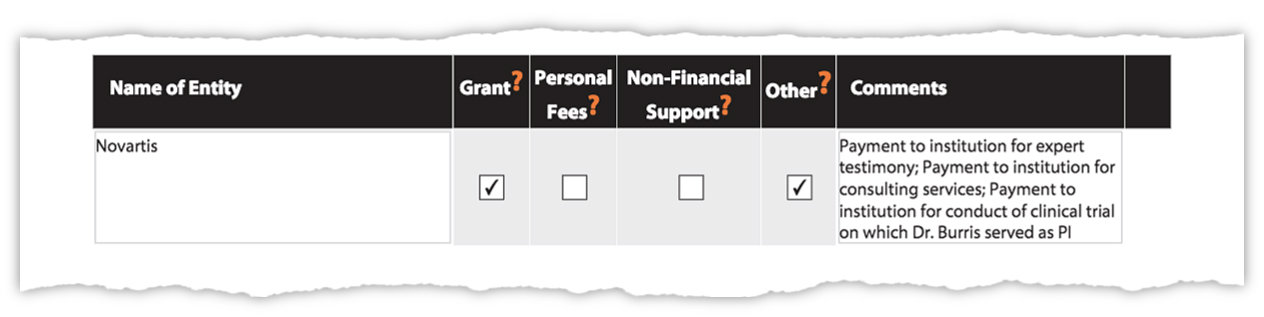
Dr. Burris’s new corrections to his disclosure forms that were posted by the New England Journal of Medicine show payments to his employer from Novartis, among other companies, for his work.

Dr. Burris’s updated disclosure listed relationships with 30 companies, including that he provided expert testimony for Novartis.

Other studies recently published by the New England Journal of Medicine also omitted disclosures, including one on a 2018 study on a treatment for sickle cell disease and another on the recently approved cancer drug Vitravki, to be sold by Bayer and Loxo Oncology.

Jennifer Zeis, a spokeswoman for the journal, said that it was contacting those studies’ authors, and that it now asked researchers to certify that they had checked their disclosures against the federal database.

Some institutions have pushed back, arguing that the journals’ inconsistent rules make it difficult for even well-meaning researchers to do the right thing.

In a letter last month To the New England Journal of Medicine, Memorial Sloan Kettering objected to the treatment of one of its top researchers, Dr. Jedd Wolchok. When he tried to correct his disclosures, the journal shifted its position, from saying its editors were satisfied with his disclosures to saying he had failed to comply with the rules, the center said in citing communications with the journal.

Dr. Wolchok, a pioneer in cancer immunotherapy, ultimately corrected 13 articles and letters to the editor.

To clarify reporting requirements, several publications are attempting only now to do what the Institute of Medicine recommended in 2009. The New England Journal is testing a new system in partnership with the Association of American Medical Colleges that would act as a central repository for reporting financial relationships.

This year, JAMA began requiring authors to confirm multiple times that they had nothing to disclose. ASCO has a centralized system for reporting conflicts to all of its journals and speaker presentations.

Dr. Bernard Lo, the chairman of the 2009 Institute of Medicine panel, said journals have only begun to confront some of the systemic flaws. “They’re certainly not out in front trying to be trailblazers, let me just say it that way,” he said. “The fact that it hasn’t been done means that nobody has it on their priority list.”

Charles Ornstein is a senior editor at ProPublica.
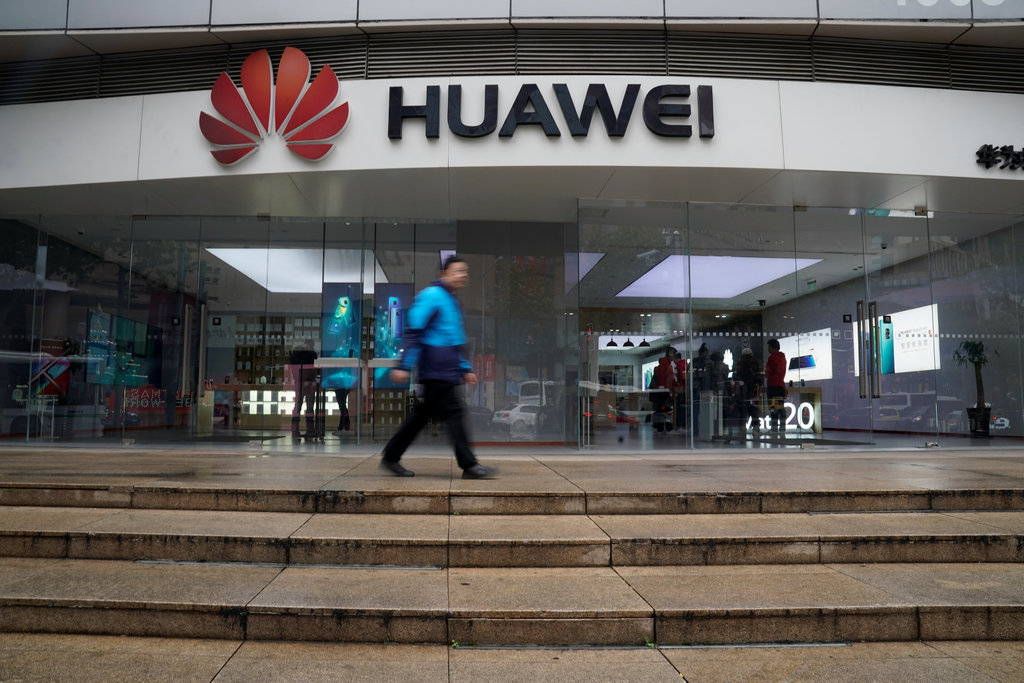
Arrest Shakes Huawei as Global Skepticism of Its Business Grows

A shopping mall in Shanghai on Thursday. China sees Huawei as a main driver of its ambitions for technological leadership. But much of the world sees it as a potential conduit for espionage and sabotage.

Via NYTIMES

This is a complicated situation that warrants intense scrutiny. Not only for the sanctions violations, but increasingly, the security issues. Technology is (about to be) everything in today’s world economies, political an social structures. In other words, everything about everything. Whether it’s this situation with China, or others with Russia, or the U.S., the way this cookie crumbles will foretell things to come. Do I have confidence this administration will get ahead of it, intelligently, responsibly, and make the right moves to protect what’s left to protect? Ask me something else.


It is one of China’s proudest corporate success stories, a colossus in cutting-edge technology that elbowed out Western rivals to become the biggest supplier of the hardware that connects our modern world.

Now, all around the globe, the walls are going up for Huawei.

The United States, which for years has considered the Chinese telecommunications giant a security threat, aimed a straight shot at the company’s leadership when it secured the arrest, in Canada, of Huawei’s chief financial officer.

But lately, Huawei’s setbacks have come on multiple fronts, from New Zealand and Australia to Britain and Canada. China sees the company as a pivotal driver of its ambitions for global technological leadership. Increasingly, much of the rest of the world sees it as a potential conduit for espionage and sabotage.

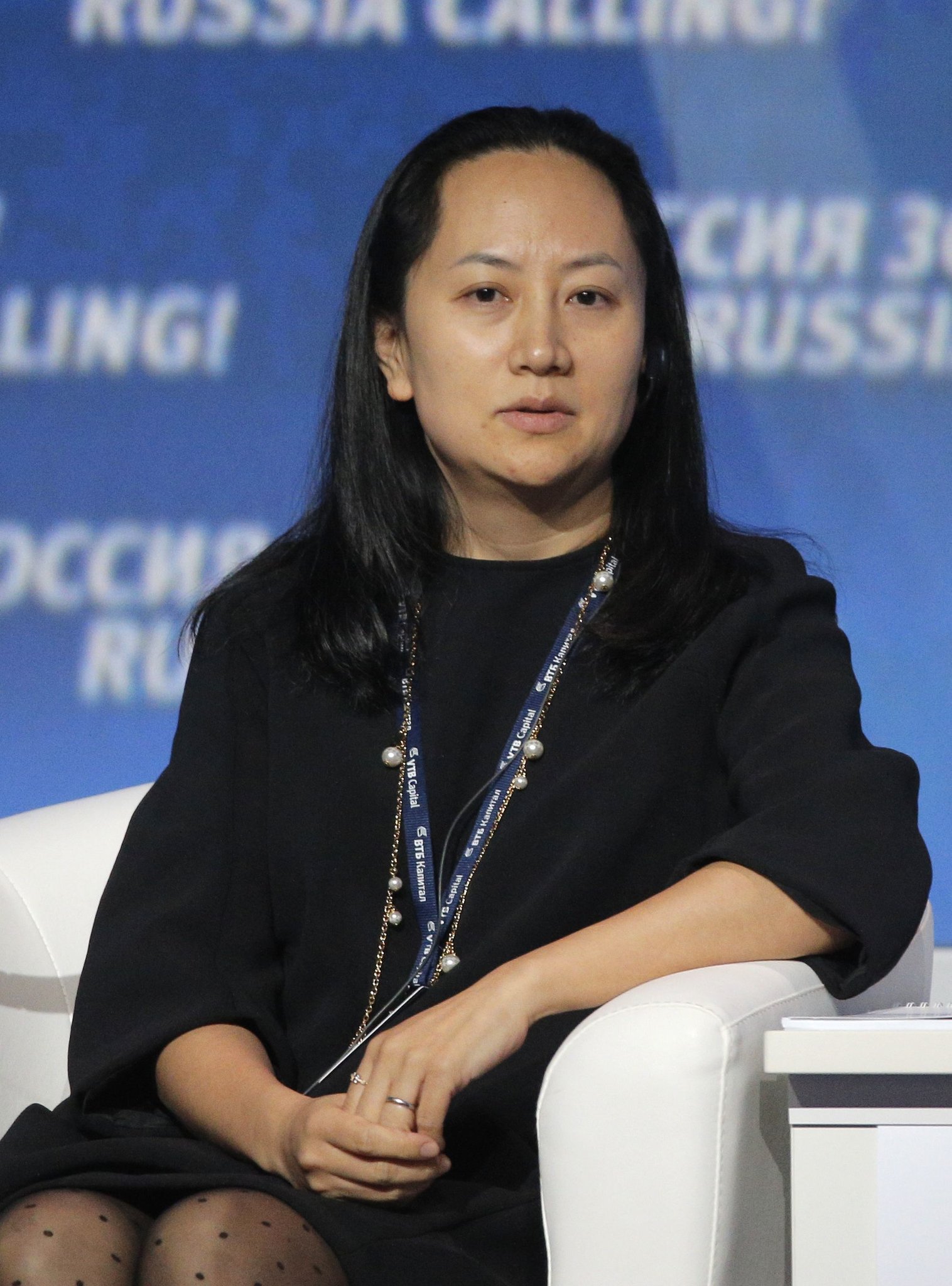
Huawei said Thursday that it was not aware of any wrongdoing by its chief financial officer, Meng Wanzhou, who is a daughter of the company’s founder, and that it complied with the law wherever it operated. The company has long denied that it spies on behalf of Beijing.

For many years, the fog of distrust surrounding Huawei was a problem largely confined to the United States. Large American mobile carriers such as AT&T have avoided using Huawei’s equipment in their networks ever since a 2012 congressional report highlighted the security risks.

In response, Huawei focused its business efforts elsewhere. Its success in wealthy places such as Europe has helped it become the planet’s largest maker of telecommunications equipment, as well as its No. 2 smartphone brand. Of the more than $90 billion in revenue it earned last year, more than a quarter came from Europe, the Middle East and Africa.

Now, a wider patch of the world appears to be siding with Washington against Chinese technology. A turn en masse against the company, led by governments in many of its most important markets, would have grave implications for its business.

Meng Wanzhou, Huawei’s chief financial officer and a daughter of its founder, was arrested on Saturday in Canada at the request of the United States.

Australia barred Huawei this year from supplying technology for the country’s fifth-generation, or 5G, mobile networks. New Zealand last week blocked one of its leading mobile carriers from buying Huawei’s 5G gear. Britain’s intelligence chief, in a rare public appearance this week, said that the country had a difficult decision to make on whether to allow Huawei to build its 5G infrastructure.

And Canada’s top spy echoed those concerns, without naming Huawei or China, in a speech on Tuesday. Huawei has tested 5G equipment with major mobile carriers in both Canada and Britain.

Behind the tariff fight that has engulfed Washington and Beijing lies a deeper contest for leadership in future technologies such as supercomputing, artificial intelligence and 5G mobile internet. For many people in China, the contest feels not merely commercial, but civilizational. At stake is the country’s ability to claim its rightful place as a superpower.

“The Chinese government and Chinese companies must face these new circumstances, take up new countermeasures and get through this stage of crisis,” Fang Xingdong, the founder of ChinaLabs, a technology think tank in Beijing, said on Thursday. “This is a necessary rite of passage for China’s global technological rise.”

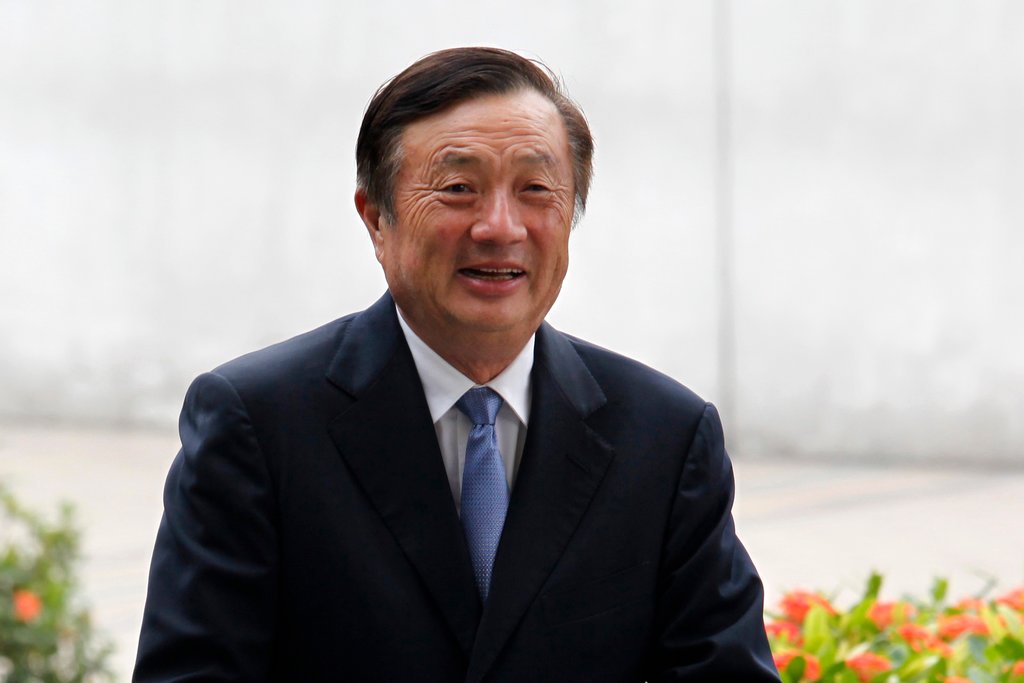
Huawei has tried to avoid being pulled into this fight. In an internal memo from January that was reviewed by The New York Times, Ren Zhengfei, the company’s founder, outlined a strategy for navigating these uncertain times.

The key, he wrote: Keep adapting. But do so quietly.

“Sometimes, it’s better to find a safe place and wait for stormy weather to pass,” Mr. Ren wrote.

Europe was one such place, Mr. Ren said. Huawei has cultivated political friendships and invested heavily in places like Britain. “Eventually, through years of effort, our goal is for Europeans to perceive Huawei as a European company,” Mr. Ren wrote.

Canada seemed to be another safe harbor. “The Canadian government is very sensible and open, giving us enormous confidence in our investments in this country,” Mr. Ren wrote.

This was all before Washington nearly put out of business Huawei’s main Chinese rival, ZTE.

In April, the Commerce Department barred ZTE from using components made in the United States after saying the company had failed to punish employees who violated American sanctions against Iran and North Korea. The move was effectively a death sentence because ZTE relied heavily on American microchips and other technology.
Ren Zhengfei, the founder of Huawei, has sought to avoid conflicts by quietly adapting the company’s approach overseas. “Eventually, through years of effort, our goal is for Europeans to perceive Huawei as a European company,” he wrote at one point.

In building its case against ZTE, the United States government began investigating Huawei as well.

When the Commerce Department first announced its findings against ZTE in 2016, it released an internal ZTE document illustrating best practices for evading American sanctions.

In describing the approach, the document cited a company it nicknamed F7 as a model for how to pull it off. The description of F7 in the document matched Huawei.

A few months later, the Commerce Department subpoenaed Huawei and requested all information about its export or re-export of American technology to Cuba, Iran, North Korea, Sudan and Syria, according to a copy of the subpoena seen by The Times.

The inquiry widened this year when the Treasury and Commerce Departments asked the Justice Department to investigate Huawei for possible sanctions violations. Prosecutors in the Eastern District of New York took on the case.

Eventually, the Trump administration decided to ease its punishment of ZTE, in an effort to cool tensions with China’s leader, Xi Jinping, ahead of a historic North Korea meeting. But the power that Washington wielded over the fates of Chinese tech companies had been made very clear to people on both sides of the Pacific. In October, the Commerce Department imposed export controls on Fujian Jinhua, a state-backed semiconductor company that has been accused of stealing American chip designs.

Should Huawei be subjected to a ban on using American technology, the consequences would be significant, though perhaps not as life-threatening as they were for ZTE.

One crucial difference is that Huawei, unlike ZTE, does not depend extensively on outside vendors such as Qualcomm for the main chips in its smartphones. Around two-thirds of the handsets that Huawei sells contain chips made in-house, said Sean Kao, a hardware analyst at the research firm IDC.

Still, American firms supply other kinds of chips in Huawei’s gear as well as optical equipment for its fiber cable networks and other specialized parts.

“I don’t know exactly how many suppliers are affected,” said Stéphane Téral, senior research director at the data provider IHS Markit. But one thing is certain, he said: “They won’t be easily substitutable.”

Life is Not Related to Any Classroom


The article below takes my shallow observations steps deeper into the future of the young adults and beyond,as they grow up.

I think this article is excellent, and on target. Have a read!


What Straight-A Students Get Wrong

If you always succeed in school, you’re not setting yourself up for success in life.

By Adam Grant, NYTimes

Dr. Grant is an organizational psychologist and a contributing opinion writer.


A decade ago, at the end of my first semester teaching at Wharton, a student stopped by for office hours. He sat down and burst into tears. My mind started cycling through a list of events that could make a college junior cry: His girlfriend had dumped him; he had been accused of plagiarism. “I just got my first A-minus,” he said, his voice shaking.

Year after year, I watch in dismay as students obsess over getting straight A’s. Some sacrifice their health; a few have even tried to sue their school after falling short. All have joined the cult of perfectionism out of a conviction that top marks are a ticket to elite graduate schools and lucrative job offers.

I was one of them. I started college with the goal of graduating with a 4.0. It would be a reflection of my brainpower and willpower, revealing that I had the right stuff to succeed. But I was wrong.

The evidence is clear: Academic excellence is not a strong predictor of career excellence. Across industries, research shows that the correlation between grades and job performance is modest in the first year after college and trivial within a handful of years. For example, at Google, once employees are two or three years out of college, their grades have no bearing on their performance. (Of course, it must be said that if you got D’s, you probably didn’t end up at Google.)

Academic grades rarely assess qualities like creativity, leadership and teamwork skills, or social, emotional and political intelligence. Yes, straight-A students master cramming information and regurgitating it on exams. But career success is rarely about finding the right solution to a problem — it’s more about finding the right problem to solve.

In a classic 1962 study, a team of psychologists tracked down America’s most creative architects and compared them with their technically skilled but less original peers. One of the factors that distinguished the creative architects was a record of spiky grades. “In college our creative architects earned about a B average,” Donald MacKinnon wrote. “In work and courses which caught their interest they could turn in an A performance, but in courses that failed to strike their imagination, they were quite willing to do no work at all.” They paid attention to their curiosity and prioritized activities that they found intrinsically motivating — which ultimately served them well in their careers.

Getting straight A’s requires conformity. Having an influential career demands originality. In a study of students who graduated at the top of their class, the education researcher Karen Arnold found that although they usually had successful careers, they rarely reached the upper echelons. “Valedictorians aren’t likely to be the future’s visionaries,” Dr. Arnold explained. “They typically settle into the system instead of shaking it up.”

This might explain why Steve Jobs finished high school with a 2.65 G.P.A., J.K. Rowling graduated from the University of Exeter with roughly a C average, and the Rev. Dr. Martin Luther King Jr. got only one A in his four years at Morehouse.

If your goal is to graduate without a blemish on your transcript, you end up taking easier classes and staying within your comfort zone. If you’re willing to tolerate the occasional B, you can learn to program in Python while struggling to decipher “Finnegans Wake.” You gain experience coping with failures and setbacks, which builds resilience.

Straight-A students also miss out socially. More time studying in the library means less time to start lifelong friendships, join new clubs or volunteer. I know from experience. I didn’t meet my 4.0 goal; I graduated with a 3.78. (This is the first time I’ve shared my G.P.A. since applying to graduate school 16 years ago. Really, no one cares.) Looking back, I don’t wish my grades had been higher. If I could do it over again, I’d study less. The hours I wasted memorizing the inner workings of the eye would have been better spent trying out improv comedy and having more midnight conversations about the meaning of life.

So universities: Make it easier for students to take some intellectual risks. Graduate schools can be clear that they don’t care about the difference between a 3.7 and a 3.9. Colleges could just report letter grades without pluses and minuses, so that any G.P.A. above a 3.7 appears on transcripts as an A. It might also help to stop the madness of grade inflation, which creates an academic arms race that encourages too many students to strive for meaningless perfection. And why not let students wait until the end of the semester to declare a class pass-fail, instead of forcing them to decide in the first month?

Employers: Make it clear you value skills over straight A’s. Some recruiters are already on board: In a 2003 study of over 500 job postings, nearly 15 percent of recruiters actively selected against students with high G.P.A.s (perhaps questioning their priorities and life skills), while more than 40 percent put no weight on grades in initial screening.

Straight-A students: Recognize that underachieving in school can prepare you to overachieve in life. So maybe it’s time to apply your grit to a new goal — getting at least one B before you graduate.

Adam Grant, an organizational psychologist at Wharton and contributing opinion writer, is the author of “Originals” and “Give and Take” and is the host of the podcast “WorkLife.”

More Salt, Fewer Whole Grains: USDA Eases School Lunch Nutrition Rules

The Trump administration is giving schools more flexibility in the meals they serve. Critics say the rollback on school lunch rules is bad for kids’ health.

I don’t read a shred of rational logic in any part of this decision. It’s nearly incomprehensible that this rollback could be justified by anyone with a straight face. When the logic is hard to see, the real reason is almost always one thing. Money.


School lunches are healthier than they were five years ago. But Agriculture Secretary Sonny Perdue says schools need more flexibility in serving meals that kids will eat.

“If kids are not eating what is being served, they are not benefiting, and food is being wasted,” Perdue said in a statement announcing a rule that is set to be published later this month.

The rule will give administrators more leeway in serving up white breads, biscuits, tortillas and white pastas by requiring that only half of the grains served in school meals each week be whole-grain rich. Currently schools are only allowed to serve whole grain-rich breads and pastas unless they get a waiver. In addition, the administration is putting the brakes on the targets developed during the Obama administration to cut back on sodium.

Read the full article. More Salt, Fewer Whole Grains: USDA Eases School Lunch Nutrition Rules –

George Bush and the Obituary Wars

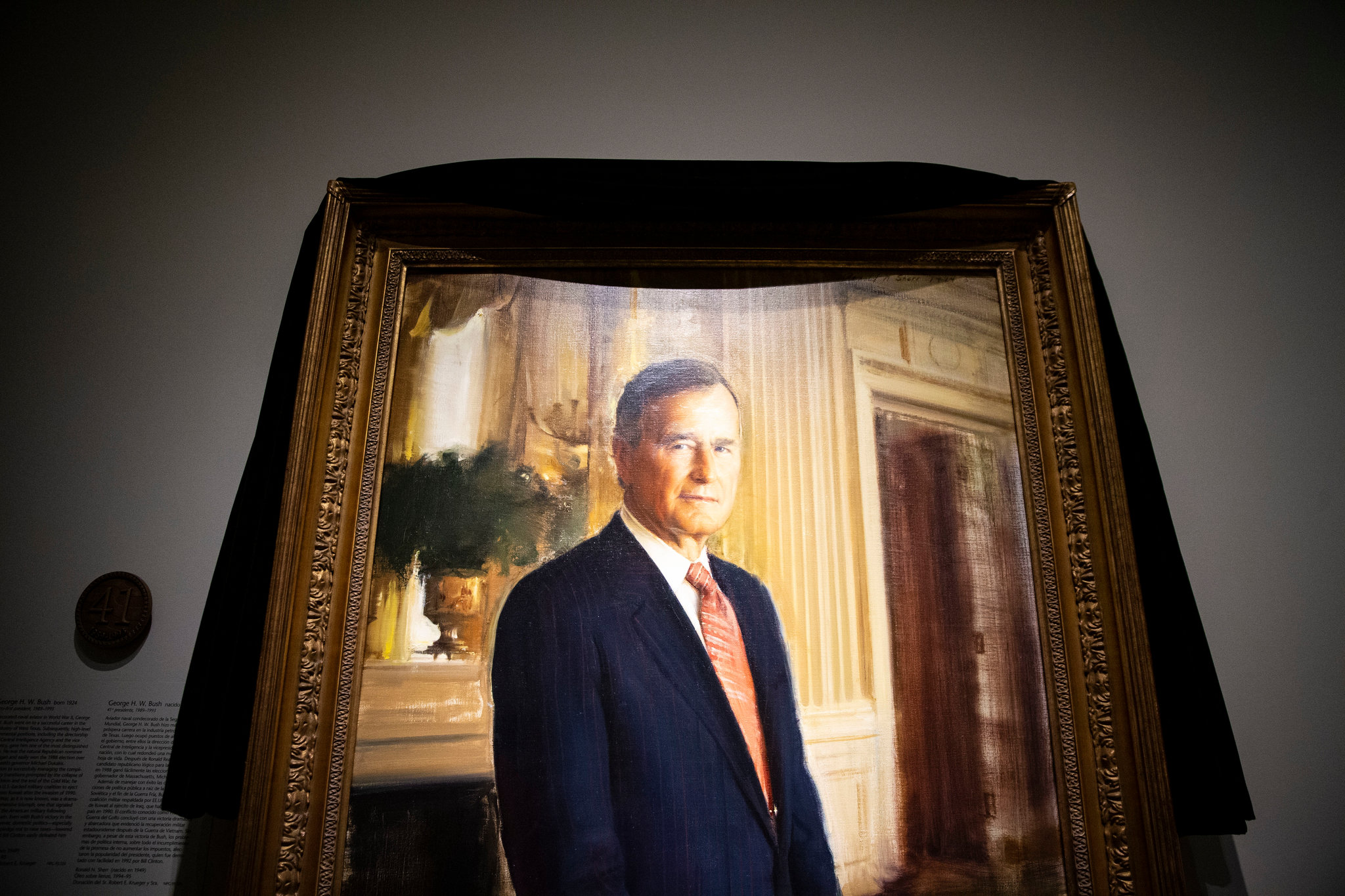
A painting of George H.W. Bush by Ronald N. Sherr at the Smithsonian National Portrait Gallery.


Enjoyed this…


We like our villains without redemption and our heroes without blemish. What happened to shades of gray?

By Frank Bruni, NYTimes

On Twitter over the weekend, the television writer Bryan Behar did something unconscionable.

He praised George H.W. Bush.

The former president had just died. In Behar’s view, it was a moment to recognize any merit in the man and his legacy.

Many of his followers disagreed. They depended on Behar for righteous liberal passion, which left no room for such Bush-flattering adjectives and phrases as “good,” “decent” and “a life of dignity.” How dare Behar lavish them on a man who leaned on the despicable Willie Horton ad, who nominated Clarence Thomas to the Supreme Court, who did too little in the face of AIDS, whose privilege often blinded him to need.

They lashed out at Behar. They unfollowed him. And they demonstrated the transcendent curse of these tribal times: Americans’ diminishing ability to hold two thoughts at once.

Bush has indelible stains on his record. He also has points of light. At times he failed the responsibilities of leadership. At times he did right by them. He showed folly and he showed wisdom, cowardice and courage, aloofness and kindness.

Accentuating the positive, especially in the hours after his death, didn’t eliminate the negative.

Behar said as much in that tweet, beginning it by alluding to disagreements with Bush’s agenda. No matter. The blowback came anyway, and he felt compelled, in a subsequent tweet, to explain, elaborate, justify.

“I’m not endorsing Bush’s AIDS policies,” he wrote. Nor, he added, was he expunging Willie Horton. “I found both to be repugnant. Nevertheless I sensed a fundamental goodness in his post-presidential life & wish his family compassion.”

And in another tweet: “I can’t believe the number of followers I’ve lost tonight for benignly expressing sorrow about President Bush’s passing. Apparently, to them, I failed some ultraprogressive litmus test.”

Should it be this hard? This tortured? I don’t know Behar or follow him on Twitter, but the reaction to his initial Bush tweet and his response to that became a kind of cause célèbre among some people I do know. They talked or tweeted about the whole episode as an example of how fractiously far we’ve fallen. The television commentator Nicolle Wallace, the former United States attorney Preet Bharara and Lanny Davis, the prominent Democratic lawyer who represents Michael Cohen, all publicly expressed support for Behar.

The tussle over remembrances of Bush echoed the tussles over remembrances of Senator John McCain, when detractors howled about any framing of him as a hero — McCain, who was captured and, for years, tortured by the North Vietnamese and who refused early release unless his fellow prisoners were also freed.

Yes, there were issues, grave ones, to be taken with his positions on American military intervention and with his domestic record. But there was valor galore, across decades of public service, and it’s possible, even imperative, to acknowledge and celebrate that.

That’s not to say that Bush or McCain, even in death, warrants only tributes. A mix of appreciations and censorious assessments is in order, and it’s very much arguable that the first wave of takes on Bush, including one that I wrote for The Times, tilted excessively toward the complimentary.

But too many of us tend to interpret events, political figures and issues in all-or-nothing, allies-or-enemies, black-and-white terms, blind to shades of gray.

A person can find Christine Blasey Ford credible, believe that Brett Kavanaugh lacks the temperament for the Supreme Court and also worry about a pile-on against him that laid waste to the concepts of due process and presumption of innocence. But the public battle lines were drawn in a way that left little room for that.

For that matter, a person can detest the conservative stacking of the court — and seethe over the manner in which Mitch McConnell blocked Merrick Garland — and accept that Trump, in elevating Kavanaugh and Neil Gorsuch, didn’t commit some treachery or abuse his office. He fulfilled campaign pledges and reminded us that elections have consequences.

A person can deplore Trump’s recklessly inflammatory characterizations of illegal immigration and treatment of migrants while acknowledging that secure borders are a legitimate concern. But that’s not an analysis I hear often on cable news.

We like our villains without redemption and our heroes without blemish, and we frequently assign those roles in overly strict alignment with our ideology. Behar’s tweets about Bush broke from that.

And some of his followers didn’t mind. He even gained new ones — proof that all isn’t lost.

But we do seem to be getting worse at complexity. At nuance. At allowing for the degree to which virtue and vice commingle in most people, including our leaders, and at understanding that it’s not a sign of softness to summon some respect for someone with a contrary viewpoint and a history of mistakes. It’s a sign of maturity. And it just might be a path back to a better place.