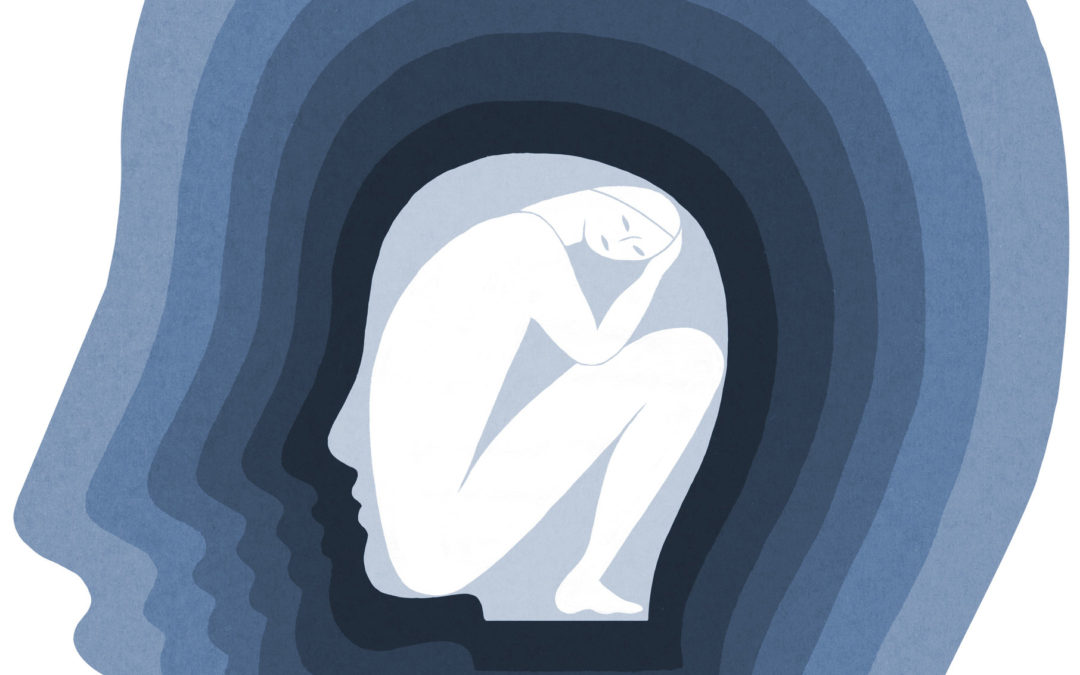
Here is an article and POV that presents a clear set of ideas that are supposedly going to address a suicide problem. According to the way it is written, suicide is not primarily an inherent mental health problem, but a situational problem.
With all due respect to Dr. Barnhorst’s sympathies, I find it hard to accept her position.
Take this sweeping statement of hers:
“We need to address the root causes of our nation’s suicide problem — poverty, homelessness and the accompanying exposure to trauma, crime and drugs.”
I’m not a doctor, nor have I delved deeply into the study of suicide. I do however, possess a deeply felt core belief on the causes of suicide. I refer to causes NOT involving religious fanatical or martyrdom scenarios, assisted suicide of terminally ill, suffering patients, and cases of exceptionally damaging early childhood abuse.
With these exclusions, my belief on suicide causes and attempts is grounded mostly in biological mental illness. Whether it starts, or ends, in a profile of poverty, homelessness, unemployment, or broken families, the final act, or attempt, of taking one’s own life, can not be responsibly assessed outside of a serious mental illness that lives in its own vacuum.
Dr. Barnhorst makes some good points about the complexity of suicide prevention, citing the frequent lack of clear advance signals, the dearth of community mental health resources, and need for more research, but she also implies that health providers are guilty for understating the risk by writing…
“…mental health providers perpetuate the narrative that suicide is preventable, if patients and family members just follow the right steps.”
I believe this is an unfair overstatement without supportive data. It is, after all, only her opinion. I do not believe mental health providers as a whole, perpetuate this narrative. Its not that easy to categorize their settled positions, with such a tidy statement.
She also writes: “If we ignore all this, and keep telling the story that there is a simple solution at hand…”
Again, this is an unfair assessment of the professionals in the field underestimating a complex problem with simple approaches.
There’s also this piece of data she draws from: “According to a 2016 study, almost half of people who try to kill themselves do so impulsively. One 2001 study…found that roughly a quarter considered their actions for less than five minutes.”
Does this mean they are free of pre-existing mental illness? I think not. In cases where they thought about it for less than five minutes. So what? Five minutes, Five hours, Five days. Five months. The logical profile is that they are pre-disposed to begin with. Just because they survive and function to that point, doesn’t mean there’s not an underlying problem waiting for the right trigger
While it is simple to prescribe medication and hope for the best, I don’t believe the vast majority of professionals treating mental health, think there is a “simple solution” to suicide. Its an exaggerated statement that is guilty itself of simplifying the situation
Dr. Barnhorst’s essay wanders off its own intended focus. Several paragraphs can be taken independently as a counter argument to the paragraph preceding it, or the one following. One could swap the sequence of them, and come up with a different conclusion and final headline.
In digesting the entire piece, what the good doctor ironically does, is illustrate just how easy it is to make arguments for addressing mental illness to prevent suicide before going on to societal causes.
Suicide prevention is a tough subject to tackle, precisely because it doesn’t make sense to rationally thinking people. Any more so than explaining a cold blooded murder. This is not to say that life is not difficult, tremendously difficult, for some people, who live with chronic depression, or manage levels of desperation o a day to day basis.
What I think happens sometimes, in all of us, is to try and explain destructive human behavior with reasoning, where no reasoning exists. Arguably, that is why mental illness is not easy to treat in the first place. You can’t have a brain swapped out for a fresh one. You can’t pull out and plug in a defective gene or brain part as needed. It’s mental illness.
Many of Dr Barnhorst’s observations are on target, but, the brains and minds that trigger suicidal thoughts and actions, on their own, with or without, external triggers, do exist. They are their own thing. They are part of the mix of the same humanity that, thankfully, gives us far far more who choose to go on living, in spite of hardships, or challenges.
After reading this article, I spoke at length with two people on the subject. One who had lived through a close friend’s attempted suicide, and another who has studied statistics on the odds of attempted suicide. I learned how complex the road to vulnerability can be in people who contemplate, or carry out their suicide. The question of determining a pre-existing mental illness feeding that vulnerability, is loaded with risk of unfairly labeling people, or worse, missing high risk individuals entirely.
Maybe, the conversation is better served by not describing mental illness to assess risk, but, by describing vulnerability instead. Hard enough.
For those without a subscription, article pasted in below.
The Empty Promise of Suicide Prevention
Many of the problems that lead people to kill themselves cannot be fixed with a little extra serotonin.
Via NYTimes, By Amy Barnhorst
April 26, 2019
SACRAMENTO — If suicide is preventable, why are so many people dying from it? Suicide is the 10th leading cause of death in the United States, and suicide rates just keep rising.
A few years ago, I treated a patient, a flight attendant, whose brother had brought her in to the psychiatric crisis unit after noticing her unusual behavior at a wedding. After the ceremony, she quietly handed out gifts and heartfelt letters to her family members. When her brother took her home, he noticed many of her furnishings and paintings were missing. In her bathroom he found three unopened bottles of prescription sleep medication.
He confronted her, and she admitted that she had donated her possessions to charity. She had also cashed out her retirement account and used the money to pay off her mortgage, her car loan and all of her bills.
When I interviewed her, she said that for the last four months, doing anything — eating, cleaning her house, talking to her neighbors — had taken colossal effort, and brought her no joy. She felt exhausted by having to live through each day, and the thought of sustaining this for years to come was an intolerable torment.
After evaluating her, I told her that I thought she was experiencing an episode of bipolar depression, and needed to be committed to the hospital while we started treatment. She shrugged and gave me her most troubling response yet: “I don’t care.”
One of the reasons I remember this woman so well is that, of all the patients I have evaluated for suicide risk, she was an anomaly. She had a sustained and thought-out commitment to ending her life. Fortunately, that allowed her to be discovered, and her family was able to quickly get her into emergency care. She responded well to lithium, one of only two psychiatric medications shown to reduce suicide (the other is an antipsychotic, clozapine). Her depression lifted slowly and she began to remember the things that made her life worth living.
She was exactly the kind of suicidal person that psychiatrists are set up to help — someone with an undiagnosed but treatable mental illness who just needs to be kept safe from herself until an effective medication kicks in.
Most suicidal patients I see follow a different pattern, like the one a resident presented to me recently. A middle-aged woman with no psychiatric history was brought in after overdosing on ibuprofen. She had recently become homeless. After seven years of sobriety, she had relapsed, taking methamphetamine to stay awake at night after she was sexually assaulted in the park where she had been sleeping. She had no supportive family, no insurance, no source of income and no education beyond high school.
She didn’t see a way out of her situation. So she walked into a pharmacy, grabbed a bottle of ibuprofen and went into the bathroom, where she choked down as many pills as possible before someone walked in.
I asked the resident how he planned to help her while she was in the hospital. After a pause, he suggested meekly, “Start her on an antidepressant?”
I could tell he knew how ridiculous it sounded.
As doctors, we want to help people, and it can be hard for us to admit when our tools are limited. Antidepressants may seem like an obvious solution, but only about 40 percent to 60 percent of patients who take them feel better. And while nearly one in 10 Americans uses antidepressants, there is very little convincing evidence to show that they reduce suicide.
This is because many of the problems that lead to suicide can’t be fixed with a little extra serotonin. Antidepressants can’t supply employment or affordable housing, repair relationships with family members or bring on sobriety.
Suicide prevention is also difficult because family members rarely know someone they love is about to attempt suicide; often that person doesn’t know herself. The flight attendant’s extensive planning is unusual; much more common is the grabbing of whatever is at hand in a moment of despair.
According to a 2016 study, almost half of people who try to kill themselves do so impulsively. One 2001 study that interviewed survivors of near-lethal attempts (defined as any attempt that would have been fatal without emergent medical intervention, or any attempt involving a gun) found that roughly a quarter considered their actions for less than five minutes. This doesn’t give anyone much time to notice something is wrong and step in.
Nonetheless, mental health providers perpetuate the narrative that suicide is preventable, if patients and family members just follow the right steps. Suicide prevention campaigns encourage people to overcome stigma, tell someone or call a hotline. The implication is that the help is there, just waiting to be sought out.
But it is not that easy. Good outpatient psychiatric care is hard to find, hard to get into and hard to pay for. Inpatient care is reserved for the most extreme cases, and even for them, there are not enough beds.
Initiatives like crisis hotlines and anti-stigma campaigns focus on opening more portals into mental health services, but this is like cutting doorways into an empty building.
And yet there are things we can do to prevent suicide. One of the few tried-and-true strategies is reducing people’s access to lethal tools, so that if they do sink into hopelessness, any attempt they make most likely won’t be fatal. If my first patient had had a gun in her house, she wouldn’t have made it to me. If my second patient had grabbed acetaminophen instead of ibuprofen, she might not have either. Averting death in that impulsive moment of despair is crucial to reducing suicide rates. Contrary to popular opinion, only a small fraction of people who survive one serious suicide attempt go on to die by another.
The decision to stop living is one that people arrive at by different paths, some over months, but many in a matter of minutes. Those people won’t be intercepted by the mental health system. We certainly need more psychiatric services and more research into better, faster-acting treatments for severe depression and suicidal thoughts, but that will never be enough.
We need to address the root causes of our nation’s suicide problem — poverty, homelessness and the accompanying exposure to trauma, crime and drugs. That means better alcohol and drug treatment, family counseling, low-income housing resources, job training and individual therapy. And for those at risk who still slip past all the checkpoints, we need to make sure they don’t have access to guns and lethal medications.
If we ignore all this, and keep telling the story that there is a simple solution at hand, the families of suicide victims will be left wondering what they did wrong.
[If you are having thoughts of suicide, call the National Suicide Prevention Lifeline at 1-800-273-8255 (TALK) or go to SpeakingOfSuicide.com/resources for a list of additional resources.]
Amy Barnhorst is the vice chairwoman of community psychiatry at the University of California, Davis.
Whether you’re already a Buttigieg booster, or, you’re not, or, you’re on the fence, please take the time to read this. It’s excellent perspective, and underscores the importance of doing real comparative study on political candidates before jumping on a bandwagon after digesting short media clips and rehearsed controlled interviews. I’ve heard Buttigieg several times, and find him likeable, but clearly, gauging likeability is not the point of this piece.
By the way, I’m running for President.
MB
A lot of would-be presidents are clever people. Few have a cleverness so well targeted toward liberal intellectuals.
How Pete Buttigieg’s Meaningless Erudition Made Him the ‘Smart’ Candidate
Via NYTimes, by Jay Caspian Kang
April 24, 2019
Late this March, a Norwegian news outlet sprang a surprise question on Pete Buttigieg, the mayor of South Bend, Ind., and candidate for president. The previous week, the writer Anand Giridharadas, who has close to half a million Twitter followers, tweeted that he met Buttigieg and introduced him to a Norwegian friend. “Instantaneously,” he wrote, “Mayor Pete starts talking to her in Norwegian, like a magic trick.” Apparently Buttigieg had read a Norwegian novel in translation and been so taken by it that he learned the language just to finish the author’s untranslated works.
The Norwegian crew wanted to hear it for themselves. In a video that circulated on social media, the reporters smile like proud parents as Buttigieg haltingly says, in Norwegian, “I’ve forgotten so much Norwegian,” followed by a few words about a book and a Norwegian pastor and then an apology, in English: “Sorry, I just ran out of Norwegian.”
The footage, shot by The Washington Post’s Dave Weigel, meets all the demands of social-media authenticity — it was shot on a phone, with the terrible audio, pixelation and skewed perspective that assure you a real human has captured a spontaneous moment. It traveled the same viral routes as Giridharadas’s tweet, acting as evidence that Buttigieg was the cleverest man ever to run for president. It hardly mattered that the main thing Buttigieg seemed able to say in Norwegian was that he had forgotten a lot of Norwegian.
As these stories spread, accompanied by more video evidence, Buttigieg became a case study in what a friend of mine calls “internetty smarts” — intelligence reduced down to a collection of references and images. Like all internetty things, this type of intelligence plays to the viewer’s vanities and prejudices. In this case, it seemed driven by the sorts of people who study literature, read magazines like this one and wring their hands about public-school segregation while quietly sending their kids to elite private schools. Did you know Mayor Pete can speak eight languages? (At least enough, according to his memoir, to order a sandwich.) Did you know he was a Rhodes scholar? Journalists leaned into the image. Ryan Lizza of Esquire asked Buttigieg if running for president was more like “Ulysses” or “Finnegans Wake”; Buttigieg’s answer was mostly incoherent, but to be fair, the question didn’t make much sense either. After watching Buttigieg speak, The New Yorker’s Adam Gopnik gushed: “Damned if he isn’t just as impressive as people say: people-smart and policy-smart and funny and eloquent and can cite Joyce without reaching. … The Harry Potter for our Voldemort? Ah! Hope.”
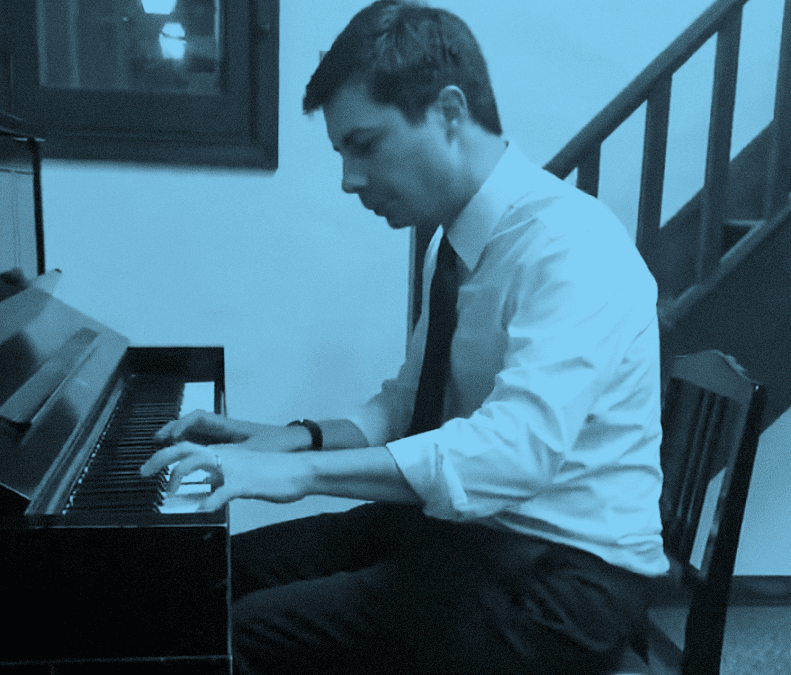
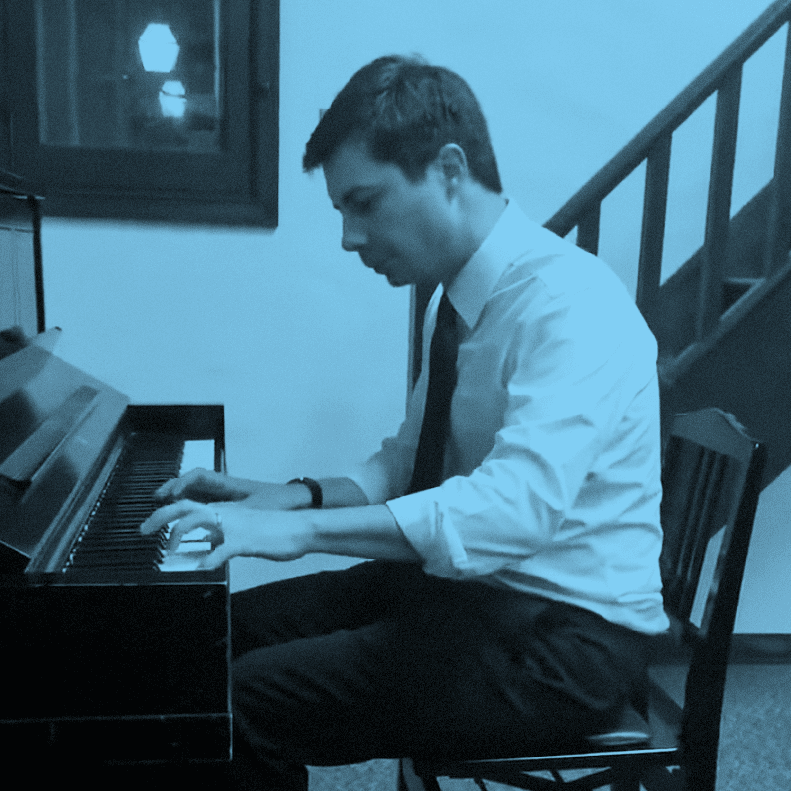
In his weeks on the national scene, Buttigieg has built a brand squarely aimed at a certain kind of liberal intellectual — the type whose prose-driven, subjective, humanist view of the world has lately fallen out of style, replaced by data analysis and ideology. His unassuming face now seems to be everywhere. The blitz has felt less like a presidential campaign than a liberal-arts variety show — a best-case scenario for what happened to Max Fischer from “Rushmore.” A few weeks after the musician Ben Folds told a story about playing a duet with the candidate, a Buttigieg adviser tweeted a video of Mayor Pete “tickling the ivories” before a talk at Scripps College. Even his choice of song — Spoon’s “The Way We Get By” — fit the brand, nailing a demographic of upper-middle-class dads who wax nostalgic about their college radio shows and the professors who taught them to love James Joyce. As Notre-Dame burned, Buttigieg offered his sympathies in French.
I don’t doubt that Mayor Pete, a Harvard graduate and the son of two professors, is genuinely smart. Nor do I think the excitement about his candidacy has been driven entirely by the polyglot fetishes of my media colleagues. He speaks in a calm, thoughtful manner with a touch of a young Dustin Hoffman’s charm. The candidacy of an openly gay man has genuine symbolic importance. And while he has yet to produce meaningful policy ideas, he has drawn some cultural lines by playing up his Midwestern roots, gently scolding “coastal elites” and the left’s obsession with “identitarianism.”
But “internetty” intelligence, like all memes, turns a human being and a lifetime of experiences into a matching game: You see a photo of a bookshelf, recognize the titles of books you wished you had read and conclude that the man standing in front of them must be smart in the way you want to be smart. This connection is not about politics or electoral outcomes; it lies in a more personal space. Imagining yourself in a book club with Pete Buttigieg becomes this election’s having a beer with George W. Bush. If the news media has an “identitarianism” problem, it’s not so much that people bunker down into racial, gender or sexual groups, but that a whole class of journalists and thinkers never seems to be able to wander out past its own pool of references — all so admiring of the same things that some are blinded to the similar backgrounds of almost every other Democratic candidate for president.
Julián Castro — a former mayor of San Antonio, a city roughly 15 times the population of South Bend — went to Stanford and Harvard Law School. Cory Booker was a Rhodes scholar, too. Amy Klobuchar went to Yale, and Kirsten Gillibrand, another Ivy Leaguer, speaks Mandarin much better than Buttigieg speaks Norwegian. (For all the Buttigieg fans gushing about Harvard, it seems worth pointing out that our current president also attended an Ivy League institution, as did Bush.) But to a certain kind of liberal, none of those bona fides seem to matter quite like a casual reference to “Ulysses” and a few words in an unexpected language. Gillibrand’s Mandarin can be written off as the résumé-building accomplishment of a striver, while Norwegian, which has no practical value for an American president, is taken as a sign of intellectual curiosity and authenticity — the sort of whimsical surplus achievement that often upstages workaday accomplishments.
Elections, of course, aren’t about qualifications. Each of our last two presidents spoke to some furtive aspiration among the electorate, embodying a general style voters were eager to identify with. Buttigieg does this for a narrower audience: With his air of decency and grab bag of gifted-and-talented party tricks, he doesn’t so much represent the will of the Democratic electorate but rather the aspirations of its educated elite, maybe especially those who see a shrinking market for their erudition.
This form of identity politics has its consequences. We are constantly arguing over the workings of American meritocracy, in schools and then colleges and then jobs: How do we get past the old networks of privilege and prejudice and accurately evaluate people’s abilities? Is the answer hard numbers and standardized tests? Or is it some “holistic” view of each person, which scrutinizes their spark and talent the same way a college applicant’s extracurricular activities are evaluated for sincerity? Who gets to make those calls?
My fear is that such a system might look a bit like Buttigieg mania: an insidious game in which entire lives of experience, or even exactly matching credentials, get overshadowed by the dilettantish longing of the upper middle class. The Mayor Pete bubble should serve as a portent of what might happen if we strip away every objective measure of merit, however problematic or biased, in favor of how someone’s idiosyncratic talents make us feel. Consider that the person Giridharadas and others have described as the opposite of Donald Trump isn’t Elizabeth Warren, a self-made public intellectual and policy expert from a more rural and blue-collar background than Buttigieg’s campus roots, but an erudite 37-year-old mayor who seems most intent on dazzling the country with his academic feats of strength.
Introspection is the examination of one’s own conscious thoughts and feelings. In psychology, the process of introspection relies exclusively on observation of one’s mental state, while in a spiritual context it may refer to the examination of one’s soul. Introspection is closely related to human self-reflection and is contrasted with external observation.
Introspection generally provides a privileged access to one’s own mental states,not mediated by other sources of knowledge, so that individual experience of the mind is unique. Introspection can determine any number of mental states including: sensory, bodily, cognitive, emotional and so forth.
Introspection has been a subject of philosophical discussion for thousands of years. The philosopher Plato asked, “…why should we not calmly and patiently review our own thoughts, and thoroughly examine and see what these appearances in us really are?”While introspection is applicable to many facets of philosophical thought it is perhaps best known for its role in epistemology; in this context introspection is often compared with perception, reason, memory, and testimony as a source of knowledge.
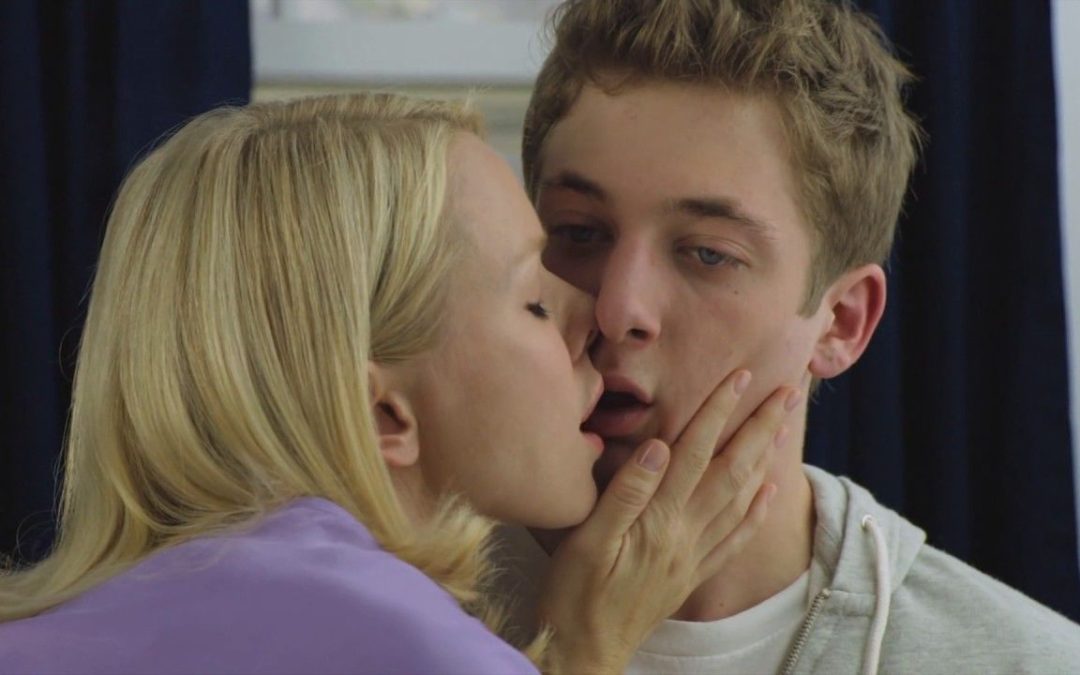
Movie 43 is an acquired taste, to say the least. Mostly inconsistent, but in between the misses, there were hits that almost broke me in two. Watch Jeremy Allen as the abused and irreparably confused son. Don’t try and look away. It doesn’t work. 😀
I am not an avid YouTuber, which leaves me fraught with conflict about why I haven’t taken advantage of it. Because there’s money to be made out there with material as written about here, that honestly, I find dumbfounding. But, no more dumbfounding than a million other sites, and postings that are just as puzzling.
Having spent so many years in advertising, sales and marketing, I have an instinctive belief to how these things seed, grow, and take shape for popular consumption. As always, as it was then, that is entirely what the money goal is about. Its not so much about memberships, or paid views. its about advertising revenue. Eyes, Minds, Pocketbooks, Wallets, and today, selling off your privacy as well.
Considering the demographic of most hyper active Youtuber viewers (not producers), I woudl venture to guess, they have either no clue about how much they give up of their privacy, or they just don’t care, waving it off as part of their life culture, as if its some type of generational badge of their moment in time. Sort of like saying, “we can’t beat’em, so lets join’em, stop being suspicious and paranoid, and assume the best for our interests is in the hands of every advertiser, and exploitative entity that has our info. Its rosy, but naiive to the nth degree.
The story below on A.S.M.R reflects one of many more similar stories in our current technoculture. I read it in full, decided it was a fad, an opportunity to make money based on the strange traction things of little importance can pick up today. But, as often happens after reading articles and reporting of quality depth and observation, I came away with two paragraphs that stuck with me, and made the whole effort worthwhile.
They are highlighted below, they are my takeaway:
Intimacy is a human need, but the ways we fulfill it are historically contingent. Of course there are explicit means like friendship and sex, but we also have all kinds of rituals that provide human connection as a second-order perk. When I go to the hair salon, I am there to get my hair cut, but that doesn’t mean that I don’t like the attention. When I listen to a podcast, I enjoy the information, but I can’t deny that I also like the sound of friends inside my house. Lots of things in everyday life throw off incidental rays of affirmation. Often, these second-order perks are so ingrained in first-order activities that we do not think to express them as desires. You might enjoy having your feet touched, but you don’t go to the shoe store just for fun. Our culture has names for people who do — freaks, kooks, eccentrics, even perverts.
When is something sexual? Somehow, we Americans have spent decades debating sexual gray areas without sufficient language to describe the different shades. Is a back massage sexual? What about texts from a married man? Is it sexual to lie on the floor of a yoga studio with 20 total strangers? To show someone your penis in a comedy club? To let a tailor measure your inseam? To enjoy it? A lot of times, when we talk about sex, what we mean to discuss is all the stuff around it — loneliness, passion, intimacy, connectedness, power or lack thereof.
(If online link is restricted to subscribers, full text is pasted below.) Also, some YouTube samples are included below.
How A.S.M.R. Became a Sensation
The brain-tingling feeling was a hard-to-describe psychological oddity. Until, suddenly, it was a YouTube phenomenon.
Via NYTimes Magazine, By Jamie Lauren Keiles
April 2019
When Jennifer Allen watched videos of space, she sometimes felt this peculiar sensation: a tingling that spread through her scalp as the camera pulled back to show the marble of the earth. It came in a wave, like a warm effervescence, making its way down the length of her spine and leaving behind a sense of gratitude and wholeness. Allen loved this feeling, but she didn’t know what caused it. It was totally distinct from anything she’d experienced before. Every two years or so she’d take to Google. She tried searching things like “tingling head and spine” or “brain orgasm.” For nine years, the search didn’t turn up anything.
Then, around 2009, it did. As always, Allen typed her phrases into Google, but this time she got a result on a message board called SteadyHealth. The post was titled WEIRD SENSATION FEELS GOOD:
i get this sensation sometimes. theres no real trigger for it. it just happens randomly. its been happening since i was a kid and i’m 21 now. some examples of what it seems has caused it to happen before are as a child while watching a puppet show and when i was being read a story to. as a teenager when a classmate did me a favor and when a friend drew on the palm of my hand with markers. sometimes it happens for no reason at all
The poster went on to demand an explanation. In the discussion, nobody had one, but many described a similar feeling — a “silvery sparkle” inside the head, a euphoric “brain-gasm” or a feeling like goose bumps in the scalp that faded “in and out in waves of heightened intensity.” Many people agreed that the sensation was euphoric. (“Aside from an actual orgasm, it’s probably the most enjoyable sensation possible,” one user wrote.) Its triggers were as varied as watching someone fill out a form, listening to whispering sounds or seeing Bob Ross paint landscapes on TV.
Allen scrolled through pages and pages of discussion.
Oh my gosh, she remembers thinking. These people are talking about exactly what I experience.
In time, that post begot a second post: WEIRD SENSATION FEELS GOOD – PART 2. As discourse on the unnamed feeling evolved, users shared accidental triggers found online — a man unlocking a damaged padlock, someone brushing her hair. These videos had a gentleness in common that many of the users found hard to describe. Some spoke of the need for a research group to better understand the sensation. Still others expressed fear over social repercussions: Were they perverts? Were they sick? Were they indigo children? Pleasure is rarely consequence-free.
“People had been told they were on drugs or that they had lice — things like that,” Allen says. “And then there was the factor of people calling it a ‘brain orgasm’ and it sounding like some sort of erotic fetish kind of thing.”
Allen had invested a lot in the discussion, even expressing interest in the fledgling research effort. She saw how the feeling had improved her sense of calm, but she worried that the subtext of a “tingling sensation” would hold the group back from legitimacy. The whole thing sounded too hokey — or too horny. If they wanted to generate scientific interest, they needed a more scientific-sounding name.
And so in February 2010, she sat down to brainstorm some ideas. Others had tried to describe the weird sensation, but spacey nicknames like “attention-induced head orgasm” had never quite caught on. Allen felt a debt to the feeling’s New Age fans, but she also saw the usefulness of more clinical language. When no existing term could meet both conditions, she made up a new one: Autonomous Sensory Meridian Response, or A.S.M.R. She started with “autonomous” because it was a feeling from within; “sensory” was self-explanatory. “Meridian” worked triple duty, suggesting peak but also orgasm and the energy pathways of traditional Chinese medicine. “Response” was just to say that it was not a constant state; it happened in reaction to a set of stimuli, like whispering, gum chewing and tapping.
“I wish I’d made it a little shorter,” Allen says. But at least it sounded better than “brain-gasm.”
She debuted the new name on the SteadyHealth board by announcing the “ASMR Group” she had registered on Facebook. Discussion-board users migrated en masse, and soon membership spanned six continents: a blogger in South Africa, an artist in Detroit, an ethnobotany researcher working in Australia. They started sharing links to videos again — not the accidental triggers of before but a new genre created for the express purpose of inducing A.S.M.R. These videos often featured anonymous women delivering soft-spoken voice-over narration. According to message-board lore, the first of this type was a video titled “Whisper 1 – hello!” It was posted in 2009 but languished in the algorithmic scrap heap of YouTube on account of its weak, unsearchable title. Now, under the search-engine-friendly banner of A.S.M.R., this new genre offered an on-demand way to trigger the once-serendipitous sensation. A new crop of YouTube creators emerged to serve up the feeling to those who knew they felt it — at that point, a small but growing subset of the public.
Around the time when Allen found SteadyHealth, there were, by one count, 12 whispering channels on YouTube; three years later, that number had more than tripled. Soon a hard-won Wikipedia page would further extend the reach of the term — and further enshrine the new video genre. By 2015, the ASMR Group had made itself irrelevant. When Allen set out to name the weird sensation, she thought she was simply describing what she felt. She couldn’t foresee that her term would enable a whole new form of entertainment — or possibly something that transcended entertainment — born of the kismet of algorithmic fate as it brushed up against the crossed wires of the brain.
Todaythe action of A.S.M.R. plays out almost exclusively on YouTube, where legions of (mostly female) creators release, by my count, around 500 new videos each day. Over the course of reporting this article, I spent at least 200 hours on the site, watching women chewgum, swallow octopus sashimi, simulate eyeexams, turn pages ofbooks and peel dried glue off artificial ears. I watched a teenage girl role-play as a 14th-century nun, treating me for the bubonic plague. I watched a two-hour recording of hair-dryer sounds.
In the A.S.M.R. scene, new trends evolve quickly, driven by the spirit of innovation, corporate product-placement deals and a process of human-algorithm interaction that pushes the best new material to the top. Any trigger that starts to find fans is endlessly taken up and reperformed — ripped off by different channels for ad dollars — at least until the next trigger takes its spot. One month, cranial nerve exams are in. The next month, creators are all shaving bars of soap, chewing bricks of raw honeycomb or eating buckets of KFC. The feeling that fuels this growth is little understood, like the dark energy pushing our universe outward.
The internet is vast, but it brings like minds together. At its best, it serves to unite kinky freaks, dissidents of oppressive regimes and sufferers of obscure diseases. At the same time, this tendency can serve the cruel or misinformed — giving shared language to Nazis and incels and other bleak dopes who were once kept mercifully isolated from one another. This feature of the internet is, at best, value-neutral; in any case, A.S.M.R. tests its limits. The YouTube subculture is bonded not by belief but rather by an ineffable sensation — perhaps the first time the internet has revealed the existence of a new feeling.
Thinkers since ancient Greece, if not before, have found themselves obsessed with the true nature of the senses; even modern philosophers get tripped up discussing qualia, the irreducible stuff of consciousness. Subjectivity is hard to isolate, by definition, and examples of new metaphysical sensations are not exactly a regular occurrence. Synesthesia, often experienced as associating numbers with colors, is one of the rare examples. Though individuals since at least the 19th century have reported tasting words, seeing sound or hearing colors, it took until the 1980s for scientists to prove that the shared experience actually correlated with real, observable activity in the brain.
Thanks to the internet, A.S.M.R. seems to have leapfrogged the science entirely. Like synesthesia, it was first discovered by way of individual reports. Unlike synesthesia, it has not depended on brain imaging for cultural acceptance. Our foremost “proof” of A.S.M.R. comes from some people searching for the term and others making videos to populate those searches. All these YouTube users may be right that the feeling is real, but the scientific research still lags far behind.
Craig Richard, a professor of physiology at Shenandoah University in Virginia, first heard the term in 2013, on a podcast. “I’m listening to the beginning of this episode thinking, ‘This is a bunch of woo-woo bunk!’ ” he told me. Just as he went to turn the podcast off, the subject changed to the painter Bob Ross — by then, a well known A.S.M.R. trigger. Richard’s eyes lit up. In childhood, he spent afternoons watching Ross paint landscapes on TV. He remembered caring more about the painter than the painting. “It was his demeanor. It was the sounds he made and the way he talked — the way he looked in the camera.”
When the episode was over, Richard went to his computer to look up the research on A.S.M.R. At that point, he found nothing academic — only websites and forums that led him to the Facebook group. He reached out to Allen, and in collaboration with a graduate student and member of the community named Karissa Burnett, they conducted an informal online survey that, over time, has received more than 25,000 voluntary responses. (Where do you feel tingles? Head, neck, arm? Do you feel relaxed? Do you feel aroused?) Richard also started ASMR University, an online archive that today remains a useful clearinghouse of research on the topic.
Still, scientific understanding has moved slowly. Funding for A.S.M.R. research is hard to justify, and the diverse nature of A.S.M.R. triggers can lead to “noisy” data. To date, ASMR University lists just 10 peer-reviewed papers. More than half of these were published in author-pay journals. The most rigorous studies use f.M.R.I. to map the activity of blood flow in the brain as participants report feeling the tingles. Outcomes have suggested, in very small samples, that A.S.M.R. might have something to do with socially bonding “affiliative behaviors,” known to release feel-good hormones like oxytocin.
Richard, for his part, considers these outcomes from an evolutionary-biology perspective. He believes that the tingles of A.S.M.R. are meant to assist in reproduction and survival, and points out that triggers like grooming, whispering and eye gazing all bear strong resemblance to the ways that humans soothe infants. In adulthood, a range of similar behaviors contribute to intimacy between mates. This may be the case, but our current understanding still leaves behind more questions than answers: If A.S.M.R. plays (or played) a key survival role, why does it seem that only some people can feel it? Why should it come to our attention only now?
It does not seem very likely that the pace and scope of research will ever catch up to the cycle of new content. For now, our chief authorities on A.S.M.R. are women and girls, alone at their computers, manipulating objects for a faceless, growing public.
Around the time that “Whisper 1 – hello!” was picking up speed in Allen’s Facebook group, Gibi — today one of YouTube’s top “A.S.M.R.tists” — was a sophomore in high school. (I’ve withheld her last name here for below-explained reasons.) Like many teenagers these days, she often had trouble falling asleep. Sometimes she would sneak her phone into her room and watch YouTube videos to relax her mind. This habit evolved by a haphazard process, led by the whims of an infinite sidebar. Makeup tutorials segued to massage, which soon gave way to A.S.M.R.
Since that fateful discovery, Gibi has watched A.S.M.R. videos every single night. The ritual followed her off to college, where the videos became a kind of white noise while she studied. A.S.M.R. was, by that point, not just for those who experienced the tingles. The genre had begun to find broader appeal as a sleep aid, an alternative to guided meditation and a drug-free, online version of Xanax. The medium had developed its own microstars, women with handles like Gentle Whispering ASMR and ASMRrequests, who filmed themselves crinkling paper, tapping their nails on large wooden bowls, dealing cards, brushing hair and pouring cold milk into bowls of Cocoa Krispies. One of Gibi’s favorites, Heather Feather ASMR, went beyond mere sound effects, performing full-scale role-play scenes infused with attentive, deliberate sound. In one, Heather administered a colorblindness test, tapping her wand on a laminated chart. In another, she played as a tattoo artist, trying on a pair of purple nitrile gloves. Watching Heather’s videos made Gibi feel as if her “brain was swimming, in a good way.” She played the same scenes over on repeat, returning to parts that gave her the tingles.
At that point, in June 2016, many A.S.M.R.tists treated YouTube like a hobby. Across channels, production value varied wildly. A creator might post the perfect tapping video, then disappear from the site forever. Gibi thought that maybe, with regular effort, she could produce a better product — a quality channel with a regular schedule that tested out new, creative triggers on a regular basis. And so, in the summer before her senior year, she started her own channel, Gibi ASMR. Six months after graduation, she was earning enough in ad revenue to treat it as her full-time job. Today she has about 1.8 million subscribers on YouTube.
I first met Gibi in Los Angeles at Daiso, the kind of Japanese discount store that sells lots of things that you didn’t know you needed. Our plan was to shop for some tingly props — any little odd or end that might yield good, recordable sound. Gibi was in town for a public appearance. That day, a video from her account was trending globally on YouTube, a role-play called “The ASMR Sleep Clinic | Tingle Experiment.” She scrolled through the trending tab on her phone, rifling through the other clips in the Top 10:
“… Ellen DeGeneres, bowling ball-versus-bulletproof glass, ramen, iPhone stuff. …”
If most entertainment aims to shock or delight, then A.S.M.R. is barely entertainment at all. It’s more like a massage for the mind. Gibi’s main goal is to relax her fans.
“If you fall asleep during my video, that’s a compliment,” she said. Sleeping fans tend to leave videos running — a boon on a platform that pays dividends for view length. In this way, for Gibi, the most valuable engagement is actually a near-total lack of engagement. Even when viewers stay awake, straightforward entertainment remains somewhat beside the point. On Gibi’s channel, some of the most-requested content is not a character or joke but the sound of fingers tapping on a bread-shaped piece of cork. Fans request the “toaster coaster” by name — the closest thing A.S.M.R. has to “Free Bird.” That day, she was searching for similar objects, made of soft, dull wood or thick glass. We entered the store to the whir of air-conditioning. Gibi made a beeline toward a rack of piggy banks.
“Whenever I pick something up, I’m always listening to it,” she said, tapping her nails on a piggy bank’s candy-coated glaze. The lacquer made a dainty, plinking sound, like the loose filament of a shaken, burned-out light bulb. She moved on to rustle a strand of orange tinsel, then brushed her hand against the grain of a vellum birthday card. We turned down an aisle of fake plastic swords.
“When I hit 300,000 subscribers, I did a 300 role play, of Queen Gorgo, Leonidas’s wife,” she recalled. “That one was really cool, but people were kind of like, ‘What is going on here?’ Sometimes I’m like, Why do I even try to put effort into a big role-play, or something like that, when I can pick something up and be like, ‘O.K., here’s an hour of me tapping,’ and I’ll get like, three million views?”
Gibi is the LeBron James of touching stuff. She touches things professionally. As she paused to fondle a makeup brush, I heard the grip of her finger pads reluctant to give up the cellophane wrapper. When she smoothed the fleece of a microfiber towel, I cringed at the drag of rough callus against terry cloth. Gibi moves with the demonstrative intent of a former high school theater kid. (She is one.) She is hot in the way of a friend’s older sister, projecting an air of humble self-assuredness.
“I think a lot of what has to do with why my channel has become popular is because I do put a lot of my personality — oh, my God!” She stopped to interrupt herself and crinkled a plastic package of pens. “I put a lot of my personality into my videos,” she said.
For those who watch her at home, this apparent emotional availability can foster a range of attachments. Gibi says that most of her viewers are kind and effusive. Under her videos, they leave thousands of comments, appreciating the sound of her voice and its power to alleviate their insomnia, anxiety and P.T.S.D. (“SHE CAN M AKE ADS RELAXING!” one fan delighted.) For others, the tender tone can be misleading.
Unloading her shopping basket at the till, she told me the story of one obsessive fan who believed she was talking directly to him. He sent her tens of thousands of messages, she said, and she filed a police report. Other fans have pried into her past, digging up old records from high school. Creepiness and harassment are widespread problems for the young female creators of the A.S.M.R. world. Gibi takes extreme precautions to protect her own privacy. She doesn’t share her last name, or her relationship status, or even what city she lives in. When she films in an airport, she is careful to choose an unplaceable background. If she happens to meet a fan on the street near her house, she pretends that she’s there on vacation.
“I’ve learned a lot about cybersecurity,” she said. “If you ever want to start a YouTube channel, delete everything, and then go back and delete more. Make everything private. Act like you have five million subscribers when you’re starting, because you can’t go back.”
Outside the store, Gibi laid her purchases out on the pavement. We surveyed the haul: the ceramic piggy bank, the strand of orange tinsel, a thick glass jar with a plastic lid, a stress ball shaped like a bakery bun and a random assortment of candy and snacks. Gibi unwrapped a pack of Hi-Chews and popped a fruit-flavored cube in her mouth.
“People are naturally curious,” she said, deforming it against the hollow of her cheek. The suction made a spitty sound. When she livestreams, she went on, she even gets nervous about the weather giving away her location. “They can look up if it’s raining where I am.”
“That’s scary,” I said.
“It’s scary,” she agreed, but all I could hear was the sound of her tongue, working the last bit of taffy from her teeth.
Intimacyis a human need, but the ways we fulfill it are historically contingent. Of course there are explicit means like friendship and sex, but we also have all kinds of rituals that provide human connection as a second-order perk. When I go to the hair salon, I am there to get my hair cut, but that doesn’t mean that I don’t like the attention. When I listen to a podcast, I enjoy the information, but I can’t deny that I also like the sound of friends inside my house. Lots of things in everyday life throw off incidental rays of affirmation. Often, these second-order perks are so ingrained in first-order activities that we do not think to express them as desires. You might enjoy having your feet touched, but you don’t go to the shoe store just for fun. Our culture has names for people who do — freaks, kooks, eccentrics, even perverts.
When is something sexual? Somehow, we Americans have spent decades debating sexual gray areas without sufficient language to describe the different shades. Is a back massage sexual? What about texts from a married man? Is it sexual to lie on the floor of a yoga studio with 20 total strangers? To show someone your penis in a comedy club? To let a tailor measure your inseam? To enjoy it? A lot of times, when we talk about sex, what we mean to discuss is all the stuff around it — loneliness, passion, intimacy, connectedness, power or lack thereof.
It’s hard to talk about A.S.M.R. without nuanced language for the things that come near sex. In the absence of such terms, the genre seems doomed to appear sexual — a suspect jumble of tingles and pleasure and subservient women you watch alone at your computer. Who, in our time, can look at a video of a young woman doing anything and not wonder who else is watching — and why? Are those who feel the tingles just a bunch of repressed weirdos? Questions like these have plagued A.S.M.R. ever since Jennifer Allen first cringed at the word “brain-gasm.”
“A lot of the visuals you might see” in A.S.M.R. videos “relate to how you might visualize what happens during healthy foreplay,” Craig Richard says. “People talking gently to each other, people touching each other lightly, gazing into each other’s eyes, expressing physical or vocal care for each other — making the other person feel safe.” If A.S.M.R. is not sexual itself, then Richard believes it might still belong to a general complex of safety, caring, connectedness and trust. “It could heighten a sexual moment, in a way the same way that massage oil can heighten a sexual moment, but oil by itself is not sexual,” he says. “We get most of our nutrition from our food, but we may supplement with vitamin pills. That’s how I view A.S.M.R. videos. There are very few people that are probably going to substitute real-world relationships.”
Every activity has a threshold of acceptable intimacy. For most people in the United States, it is normal to express that you like having your hair shampooed in a salon. It is less normal to say that you derive pleasure from taking an eye test or by making eye contact with an inquisitive waitress. These affective norms can be counterintuitive, especially considering how many of our jobs require employees to feign loving attention. Still, they exist for a reason. It is one thing to ask someone to fit your shoes; it’s another to enlist them in your search for human comfort.
Part of the joy of A.S.M.R. is the way it allows us to invert the equation. In A.S.M.R. videos, people engage in regular tasks while drawing those second-order pleasures to the fore. The usual priorities of the eye test are distorted; now it’s less about nearsightedness and more about whispered instruction and warm light. A.S.M.R. combines the one-way sociality of podcasts with the outcome-driven imperative of porn. In an age defined by loneliness and dislocation, it’s a lot to ask someone to turn that away.
Nevertheless, the gender imbalance of performers seems suspect. The viewing pattern even looks similar to porn, but this perhaps goes beyond mere horniness. For much of human history, women have been cast into care-taking roles. With centuries of imbalance, it makes plenty of sense that our brains would find peace in these strange and gendered invocations of comfort. Is that healthy? Is that normal? Really, who can say? Sitting alone in front of a screen, nothing seems that weird anymore.
Here, I suppose is the place to come clean and admit that I’ve never felt A.S.M.R. In watching those hours of YouTube, I often felt calm (and I sometimes felt horny), but not even once did my brain let loose a tingle. By the end, I found myself feeling isolated — confusingly excluded from a mass phenomenon beloved for its success at assuaging loneliness. In a last-ditch attempt to feel it for myself, I flew up to Oakland to meet Melinda Lauw, co-creator of the service Whispers on Demand and a provider of one-on-one A.S.M.R. experiences.
Lauw grew up in Singapore and studied fine art and art history at Goldsmiths in London. She first got involved with A.S.M.R. through Whisperlodge, an immersive theater piece she produced with the playwright Andrew Hoepfner. Whispers on Demand grew out of that project — less theatrical, more therapeutic. Lauw’s clients were mostly women, many in the tech industry. The sessions cost $150 per hour.
Our meeting was held on a morning in September in a rent-by-the-hour conference room. I was invited to take off my shoes. In advance of the session, I’d filled out a form, confessing my tingle virginity. Lauw had arranged a pile of maybe-triggers in the style of a surgical instrument tray. The session began with us sitting side by side, and soon she was using each object on my body — rubbing the lavender oil on my wrist, crinkling the tissue paper near my head and pulsating my knee with the metal tuning fork.
I lay down on the couch, and she styled my hair with a wide cotton band, then let my hair down, then styled it again. She polished my ear with a ridged cotton swab. It felt nice to be touched, if just by way of a Q-tip, but only one time did I maybe feel a tingle. As the tip of a small, clean makeup brush outlined the greasy crease of my nose, I felt something creep on the side of my head, like a cold millipede crawling underneath my scalp — were these the famed tingles of A.S.M.R.?
Maybe so, but I pushed them away. I am not so libertine or well adjusted to make use of pleasures beyond a social script. Though Lauw was a calming and trustworthy guide, a few times I thought I might scream for no reason.
Soon enough, our session was over. We both stood up and walked to use the bathroom. Lauw waited for me outside the stall. When I was done, I leaned on the sink and offered a few words of thanks for the session. Lauw didn’t ask if I’d felt anything, and for this omission, I was grateful. Usually paid intimacy concludes with some kind of definitive transaction. I’d paid online, so I offered her a hug. We stood for a moment, embracing in the bathroom. Then I pulled away, thanked her again and returned to the noisy city streets, alone.