
Question # 3
If time was irrelevant, would our lives be better?



Studies have shown that the levels of THC, the main psychoactive compound in pot, have risen dramatically in the U.S. from 1995 to 2017.
As more states legalize marijuana, more people in the U.S. are buying and using weed — and the kind of weed they can buy has become much stronger.
That concerns scientists who study marijuana and its effects on the body, as well as emergency room doctors who say they’re starting to see more patients who come into the ER with weed-associated issues.
Some 26 million Americans ages 12 and older reported being current marijuana users in 2017, according to the National Survey on Drug Use and Health. It’s not clear how many users have had serious health issues from strong weed, and there’s a lot that’s still unknown about the potential risks. But scientists are starting to learn more about some of them.
The potency of weed depends on the amount of delta-9-tetrahydrocannabinol, or THC, the main compound responsible for the drug’s psychoactive effects. One study of pot products seized by the U.S. Drug Enforcement Administration found the potency increased from about 4% THC in 1995 to about 12% in 2014. By 2017, another study showed, the potency of illicit drug samples had gone up to 17.1% THC.
“That’s an increase of more than 300% from 1995 to about 2017,” says Staci Gruber, director of the Marijuana Investigations for Neuroscientific Discovery (MIND) program at the Harvard-affiliated McLean Hospital in Belmont, Mass. “I would say that’s a considerable increase.”
And some products with concentrated forms of cannabis, like hash and hash oil, can have as much as 80% to 90% THC, she adds.
“I think most people are aware of the phenomenon that ‘this is not your grand daddy’s weed,’ Gruber says. “I hear this all the time.”

Daily Marijuana Use And Highly Potent Weed Linked To Psychosis
But people might not be aware of the potential health risks of highly potent weed. “The negative effects of cannabis have primarily been isolated and localized to THC,” says Gruber. “So it stands to reason that higher levels of THC may in fact confer a greater risk for negative outcome.”
“In general, people think, ‘Oh, I don’t have to worry about marijuana. It’s a safe drug,’ ” says Nora Volkow, director of the National Institute on Drug Abuse. “The notion that it is completely safe drug is incorrect when you start to address the consequences of this very high content of 9THC.”
THC can have opposite effects on our bodies at high and low doses, Volkow says. Take anxiety levels, for example.
“When someone takes marijuana at a low [THC] content to relax and to stone out, actually, it decreases your anxiety,” she says. But high concentrations can cause panic attacks, and if someone consumes high-enough levels of THC, “you become full-blown psychotic and paranoid.”
Weed can have a similar paradoxical effect on the vascular system. Volkow says: “If you take low-content THC it will increase your blood flow, but high content [THC] can produce massive vasoconstriction, it decreases the flow through the vessels.”
And at low concentrations, THC can be used to treat nausea in cancer patients undergoing chemotherapy. But Volkow says that “patients that consume high content THC chronically came to the emergency department with a syndrome where they couldn’t stop vomiting and with intense abdominal pain.”
It’s a condition called cannabinoid hyperemesis syndrome.
“The typical patient uses [inhales] about 10 times per day … and they come in with really difficult to treat nausea and vomiting,” says Andrew Monte, an associate professor of emergency medicine and medical toxicology at the University of Colorado’s school of medicine. “Some people have died from this … syndrome, so that is concerning.”
Scientists don’t know exactly how high levels of THC can trigger the syndrome, but the only known treatment is stopping cannabis use.
While the number of people who’ve had the syndrome is small, Monte says he and his colleagues have documented a rise in the number of cases at emergency rooms in Colorado since marijuana was legalized there five years ago. A study by Monte and his team found that cyclical vomiting cases made up about 18% of inhaled cannabis-related cases at his ER.
They also found that statewide, the overall number of ER cases associated with cannabis use has gone up. And Monte says his ER has “seen an approximately a three-fold increase in emergency department visits just by frequency. It doesn’t mean we’re getting overwhelmed by these visits due to cannabis, it’s just that means that there are more patients overall.”
Most people show up at his emergency department because of “intoxication” from too much pot, either straight or mixed with other drugs, Monte says. The bulk of these cases are due to inhaled cannabis, though edibles are associated with more psychiatric visits.
“We’re seeing an increase in psychosis and hallucinations, as well as anxiety and even depression and suicidality,” Monte says.
He thinks the increased potency of marijuana plays a role in all these cases. “Whenever you have a higher dose of one of these types of drugs, the patient is at a higher risk of having an adverse drug event. If the concentration is so much higher … it’s much easier to overshoot the low-level high that they’re looking for.”
Not everyone is at equal risk, Monte adds. “Many many people use cannabis safely,” he says. “The vast majority don’t end up in our emergency department.”
Some people are more vulnerable than others to the potential negative effects of high THC cannabis.
Adolescent and young adults who use recreationally are especially susceptible because their brains are still developing and are sensitive to drugs in general, says Gruber of the MIND program. In a recent review of existing studies, she found that marijuana use among adolescents affects cognition — especially memory and executive functions, which determine mental flexibility and ability to change our behavior.
Medical marijuana users can face unexpected and unwelcome effects from potent weed. “It’s very important for people to understand that they may not get the response they anticipated,” Gruber notes.
Studies done on the medical benefits of pot usually involve very low doses of THC, says Monte, who adds that those doses “are far lower than what people are getting in a dispensary right now.”
David Dooks, a 51-year-old based in the Boston area turned to marijuana after an ankle surgery last year. “I thought that medical marijuana might be a good alternative to opioids for pain management,” he says.
Based on the advice at a dispensary, David began using a variety of weed with 56.5% THC and says it only “exacerbated the nerve pain.” After experimenting with a few other strains, he says, what worked for him was one with low (0.9%) THC, which eased his nerve pain.
Whether people are using recreationally or medically, patients should educate themselves as much as possible and be cautious while using, Monte says.
Avoiding higher THC products and using infrequently can also help reduce risk, Volkow adds. “Anyone who has had a bad experience, whether it’s psychological or biological, they should stay away from this drug,” she notes.
Ask for as much information as possible before buying. “You have to know what’s in your weed,” Gruber says. “Whether or not it’s conventional flower that you’re smoking or vaping, an edible or tincture, it’s very important to know what’s in it.”
And the old saying “start low, go slow,” is a good rule of thumb, she adds. “You can always add, but you can never take it away. Once it’s in, it’s in.”

Via NPR, By Hannah Rosin
Militia leader Ammon Bundy, famous for leading an armed standoff in Oregon, had a tender moment in November of last year. He recorded a Facebook post saying that perhaps President Trump’s characterization of the migrant caravan on the U.S.-Mexico border was somewhat broad. Maybe they weren’t all criminals, he said. “What about those who have come here for reasons of need?”
Bundy did not say he was breaking with Trump. He just asked his followers to put themselves in the shoes of “the fathers, the mothers, the children” who came to escape violence. It was a call for a truce grounded in empathy, the kind you might hear in a war zone, say, or an Easter Sunday sermon. Still, it was met with a swift and rageful response from his followers, so overwhelming that within days, Bundy decided to quit Facebook.
In an earlier era, Bundy’s appeal might have resonated. But he failed to tune in to a critical shift in American culture — one that a handful of researchers have been tracking, with some alarm, for the past decade or so. Americans these days seem to be losing their appetite for empathy, especially the walk-a-mile-in-someone’s-shoes Easter Sunday morning kind.
When I was growing up in the ’70s, empathy was all the rage. The term was coined in 1908; then, social scientists and psychologists started more aggressively pushing the concept into the culture after World War II, basically out of fear. The idea was that we were all going to kill each other with nuclear weapons — or learn to see the world through each other’s eyes. In my elementary school in the 1970s, which was not progressive or mushy in any way, we wrote letters to pretend Russian pen pals to teach us to open our hearts to our enemies.
And not just enemies. Civil rights activists had also picked up on the idea. Kenneth Clark, a social scientist and civil rights activist, half-jokingly proposed that people in power all be required to take an “empathy pill” so they could make better decisions. His hope was that people with power and privilege would one day inhabit the realities of people without power, not from the safe, noblesse oblige distance of pity, but from the inside. An evolved person was an empathetic person, choosing understanding over fear.
Then, more than a decade ago, a certain suspicion of empathy started to creep in, particularly among young people. One of the first people to notice was Sara Konrath, an associate professor and researcher at Indiana University. Since the late 1960s, researchers have surveyed young people on their levels of empathy, testing their agreement with statements such as: “It’s not really my problem if others are in trouble and need help” or “Before criticizing somebody I try to imagine how I would feel if I were in their place.”
Konrath collected decades of studies and noticed a very obvious pattern. Starting around 2000, the line starts to slide. More students say it’s not their problem to help people in trouble, not their job to see the world from someone else’s perspective. By 2009, on all the standard measures, Konrath found, young people on average measure 40 percent less empathetic than my own generation — 40 percent!
It’s strange to think of empathy – a natural human impulse — as fluctuating in this way, moving up and down like consumer confidence. But that’s what happened. Young people just started questioning what my elementary school teachers had taught me.
Their feeling was: Why should they put themselves in the shoes of someone who was not them, much less someone they thought was harmful? In fact, cutting someone off from empathy was the positive value, a way to make a stand.
So, for example, when the wife of white nationalist Richard Spencer recently told BuzzFeed he had abused her, the question debated on the lefty Internet was: Why should we care that some woman who chose to ally herself with a nasty racist got herself hurt? Why waste empathy on that? (Spencer, in a court filing, denies all her allegations.)
The new rule for empathy seems to be: reserve it, not for your “enemies,” but for the people you believe are hurt, or you have decided need it the most. Empathy, but just for your own team. And empathizing with the other team? That’s practically a taboo.
And it turns out that this brand of selective empathy is a powerful force.
In the past 20 years, psychologists and neurologists have started to look at how empathy actually works, in our brains and our hearts, when we’re not thinking about it. And one thing they’ve found is that “one of the strongest triggers for human empathy is observing some kind of conflict between two other parties,” says Fritz Breithaupt, a professor at Indiana University who studies empathy. “Once they take the side, they’re drawn into that perspective. And that can lead to very strong empathy and too strong polarization with something you only see this one side and not the other side any longer.”
A classic example is the Super Bowl, or any Auburn, Alabama game.
But these days in the news, examples come up every day: the Kavanaugh hearings, emergency funding for a wall, Spike Lee walking out of the Oscars, the Barr report, Kirstjen Nielsen, every third thing on Twitter.
Researchers who study empathy have noticed that it’s actually really hard to do what we were striving for in my generation: empathize with people who are different than you are, much less people you don’t like. But if researchers set up a conflict, people get into automatic empathy overdrive, with their own team. This new research has scrambled notions of how empathy works as a force in the world. For example, we often think of terrorists as shockingly blind to the suffering of innocents. But Breithaupt and other researchers think of them as classic examples of people afflicted with an “excess of empathy. They feel the suffering of their people.”
Breithaupt called his new book The Dark Sides of Empathy, because there’s a point at which empathy doesn’t even look like the kind of universal empathy I was taught in school. There is a natural way that empathy gets triggered in the brain — your pain centers light up when you see another person suffering. But out in the world it starts to look more like tribalism, a way to keep reinforcing your own point of view and blocking out any others.
Breithaupt is alarmed at the apparent new virus of selective empathy and how it’s deepening divisions. If we embrace it, he says, then “basically you give up on civil society at that point. You give up on democracy. Because if you feed into this division more and you let it happen, it will become so strong that it becomes dangerous.”
We can’t return to my generation’s era of empathy innocence, because we now know too much about how the force actually works. But we can’t give up on empathy either, because empathy is “90 percent what our life is all about,” Breithaupt says. “Without it, we would be just alone.”
In his book Breithaupt proposes an ingenious solution: give up on the idea that when we are “empathizing” we are being altruistic, or helping the less fortunate, or in any way doing good. What we can do when we do empathy, proposes Fritz, is help ourselves. We can learn to see the world through the eyes of a migrant child and a militia leader and a Russian pen pal purely so we can expand our own imaginations, and make our own minds richer. It’s selfish empathy. Not saintly, but better than being alone.
Via NYTimes, By David Brooks
Mr. Brooks is an Opinion columnist. This essay is adapted from his forthcoming book, “The Second Mountain: The Quest for a Moral Life.”
April 6, 2019
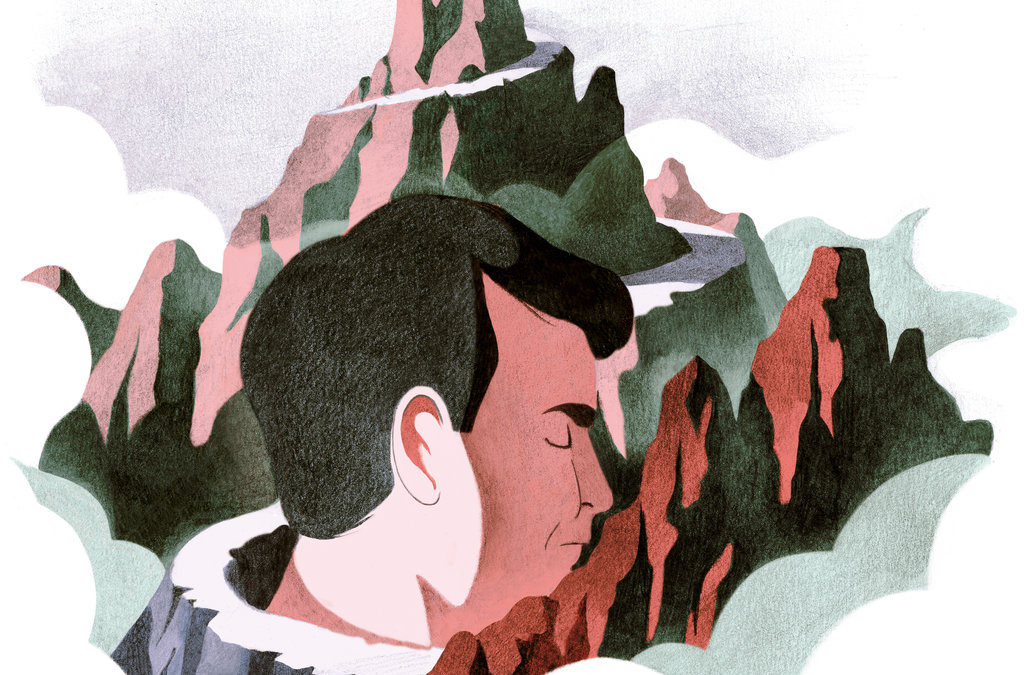
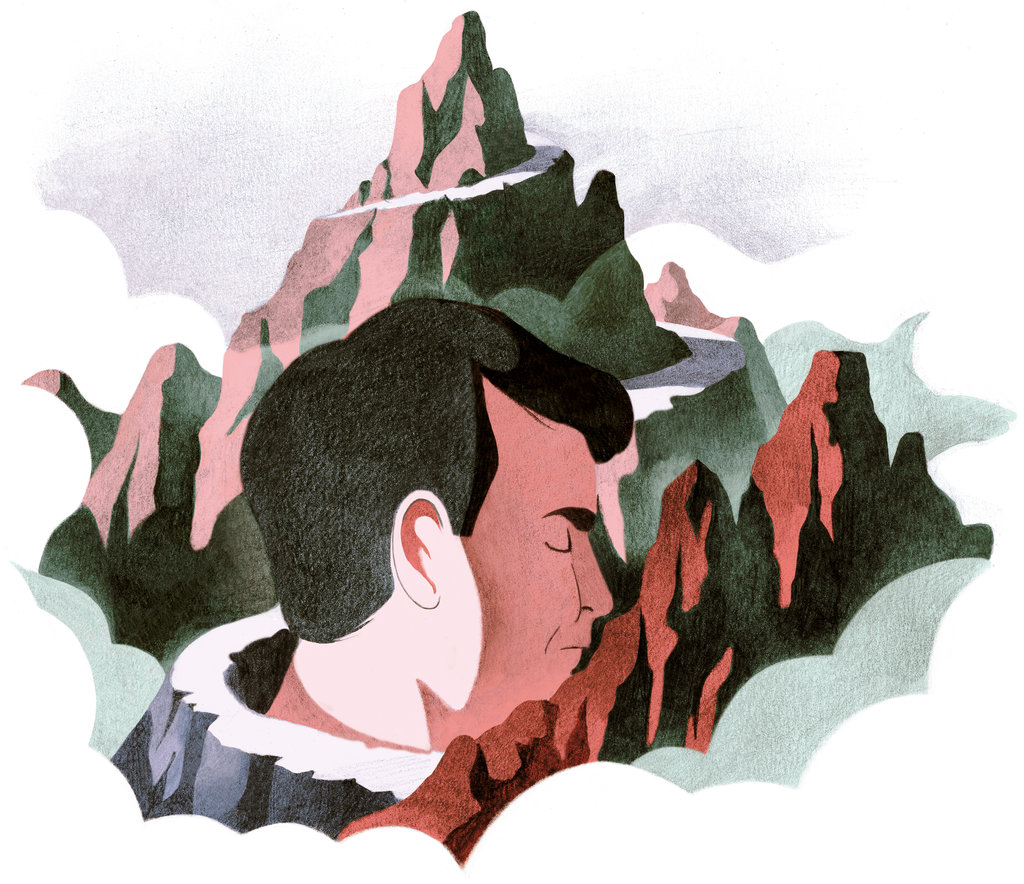
Many of the people I admire lead lives that have a two-mountain shape. They got out of school, began their career, started a family and identified the mountain they thought they were meant to climb — I’m going to be an entrepreneur, a doctor, a cop. They did the things society encourages us to do, like make a mark, become successful, buy a home, raise a family, pursue happiness.
People on the first mountain spend a lot of time on reputation management. They ask: What do people think of me? Where do I rank? They’re trying to win the victories the ego enjoys.
These hustling years are also powerfully shaped by our individualistic and meritocratic culture. People operate under this assumption: I can make myself happy. If I achieve excellence, lose more weight, follow this self-improvement technique, fulfillment will follow.
But in the lives of the people I’m talking about — the ones I really admire — something happened that interrupted the linear existence they had imagined for themselves. Something happened that exposed the problem with living according to individualistic, meritocratic values.
Some of them achieved success and found it unsatisfying. They figured there must be more to life, some higher purpose. Others failed. They lost their job or endured some scandal. Suddenly they were falling, not climbing, and their whole identity was in peril. Yet another group of people got hit sideways by something that wasn’t part of the original plan. They had a cancer scare or suffered the loss of a child. These tragedies made the first-mountain victories seem, well, not so important.
Life had thrown them into the valley, as it throws most of us into the valley at one point or another. They were suffering and adrift.
Some people are broken by this kind of pain and grief. They seem to get smaller and more afraid, and never recover. They get angry, resentful and tribal.
But other people are broken open. The theologian Paul Tillich wrote that suffering upends the normal patterns of life and reminds you that you are not who you thought you were. The basement of your soul is much deeper than you knew. Some people look into the hidden depths of themselves and they realize that success won’t fill those spaces. Only a spiritual life and unconditional love from family and friends will do. They realize how lucky they are. They are down in the valley, but their health is O.K.; they’re not financially destroyed; they’re about to be dragged on an adventure that will leave them transformed.
They realize that while our educational system generally prepares us for climbing this or that mountain, your life is actually defined by how you make use of your moment of greatest adversity.
So how does moral renewal happen? How do you move from a life based on bad values to a life based on better ones?
First, there has to be a period of solitude, in the wilderness, where self-reflection can occur.
“What happens when a ‘gifted child’ finds himself in a wilderness where he’s stripped away of any way of proving his worth?” Belden Lane asks in “Backpacking With the Saints.” What happens where there is no audience, nothing he can achieve? He crumbles. The ego dissolves. “Only then is he able to be loved.”
That’s the key point here. The self-centered voice of the ego has to be quieted before a person is capable of freely giving and receiving love.
Then there is contact with the heart and soul — through prayer, meditation, writing, whatever it is that puts you in contact with your deepest desires.
“In the deeps are the violence and terror of which psychology has warned us,” Annie Dillard writes in “Teaching a Stone to Talk.” “But if you ride these monsters deeper down, if you drop with them farther over the world’s rim, you find what our sciences cannot locate or name, the substrate, the ocean or matrix or ether which buoys the rest, which gives goodness its power for good, and evil its power for evil, the unified field: our complex and inexplicable caring for each other.”
In the wilderness the desire for esteem is stripped away and bigger desires are made visible: the desires of the heart (to live in loving connection with others) and the desires of the soul (the yearning to serve some transcendent ideal and to be sanctified by that service).
When people are broken open in this way, they are more sensitive to the pains and joys of the world. They realize: Oh, that first mountain wasn’t my mountain. I am ready for a larger journey.
Some people radically change their lives at this point. They quit corporate jobs and teach elementary school. They dedicate themselves to some social or political cause. I know a woman whose son committed suicide. She says that the scared, self-conscious woman she used to be died with him. She found her voice and helps families in crisis. I recently met a guy who used to be a banker. That failed to satisfy, and now he helps men coming out of prison. I once corresponded with a man from Australia who lost his wife, a tragedy that occasioned a period of reflection. He wrote, “I feel almost guilty about how significant my own growth has been as a result of my wife’s death.”
Perhaps most of the people who have emerged from a setback stay in their same jobs, with their same lives, but they are different. It’s not about self anymore; it’s about relation, it’s about the giving yourself away. Their joy is in seeing others shine.
In their book “Practical Wisdom,” Barry Schwartz and Kenneth Sharpe tell the story of a hospital janitor named Luke. In Luke’s hospital there was a young man who’d gotten into a fight and was now in a permanent coma. The young man’s father sat with him every day in silent vigil, and every day Luke cleaned the room. But one day the father was out for a smoke when Luke cleaned it.
Later that afternoon, the father found Luke and snapped at him for not cleaning the room. The first-mountain response is to see your job as cleaning rooms. Luke could have snapped back: I did clean the room. You were out smoking. The second-mountain response is to see your job as serving patients and their families. In that case you’d go back in the room and clean it again, so that the father could have the comfort of seeing you do it. And that’s what Luke did.
If the first mountain is about building up the ego and defining the self, the second is about shedding the ego and dissolving the self. If the first mountain is about acquisition, the second mountain is about contribution.
On the first mountain, personal freedom is celebrated — keeping your options open, absence of restraint. But the perfectly free life is the unattached and unremembered life. Freedom is not an ocean you want to swim in; it is a river you want to cross so that you can plant yourself on the other side.
So the person on the second mountain is making commitments. People who have made a commitment to a town, a person, an institution or a cause have cast their lot and burned the bridges behind them. They have made a promise without expecting a return. They are all in.
I can now usually recognize first- and second-mountain people. The former have an ultimate allegiance to self; the latter have an ultimate allegiance to some commitment. I can recognize first- and second-mountain organizations too. In some organizations, people are there to serve their individual self-interests — draw a salary. But other organizations demand that you surrender to a shared cause and so change your very identity. You become a Marine, a Morehouse Man.
I’ve been describing moral renewal in personal terms, but of course whole societies and cultures can swap bad values for better ones. I think we all realize that the hatred, fragmentation and disconnection in our society is not just a political problem. It stems from some moral and spiritual crisis.
We don’t treat one another well. And the truth is that 60 years of a hyper-individualistic first-mountain culture have weakened the bonds between people. They’ve dissolved the shared moral cultures that used to restrain capitalism and the meritocracy.
Over the past few decades the individual, the self, has been at the center. The second-mountain people are leading us toward a culture that puts relationships at the center. They ask us to measure our lives by the quality of our attachments, to see that life is a qualitative endeavor, not a quantitative one. They ask us to see others at their full depths, and not just as a stereotype, and to have the courage to lead with vulnerability. These second-mountain people are leading us into a new culture. Culture change happens when a small group of people find a better way to live and the rest of us copy them. These second-mountain people have found it.
Their moral revolution points us toward a different goal. On the first mountain we shoot for happiness, but on the second mountain we are rewarded with joy. What’s the difference? Happiness involves a victory for the self. It happens as we move toward our goals. You get a promotion. You have a delicious meal.
Joy involves the transcendence of self. When you’re on the second mountain, you realize we aim too low. We compete to get near a little sunlamp, but if we lived differently, we could feel the glow of real sunshine. On the second mountain you see that happiness is good, but joy is better.
David Brooks has been a columnist with The Times since 2003. He is the author of “The Road to Character” and the forthcoming book, “The Second Mountain.” @nytdavidbrooks
Like this. I really like Pamela. ☺️

“I find that many new technologies are actually far less efficient than the tools they attempt to replace,” said Pamela Paul, editor of The New York Times Book Review. Credit: Krista Schlueter for The New York Times
Via NYTimes, Featuring Pamela Paul
How do New York Times journalists use technology in their jobs and in their personal lives? Pamela Paul, editor of The New York Times Book Review, discussed the tech she’s using.
About two years ago, you wrote an article about how you downgraded all your tech. How did you downgrade? What do you love about having done that?
It’s easier than you might think because you can pretty effectively downgrade merely by neglecting to upgrade. You just naturally find yourself sliding backward. In my case, this shift has been deliberate, but more about making a mental adjustment than about deactivating existing technology. (Though I did permanently jettison the electric toothbrush.)
There’s a prevailing assumption that just because there’s a new high-tech version of something previously handled in a low-tech way, one should adopt that technology. I come at it from a different angle, which is to start with the need or problem and ask myself: Will this new technology substantively help? And if the upside is speed or information, my next question is: What’s the trade-off? What do I lose along with this gain, and on balance, do the gains outweigh the losses? (Possibly the only thing I learned from Econ 111.)
Quite often, I find that it doesn’t. What lands in the loss column may have to do with process, and the process of doing something can be just as valuable as the end result. I read this book last year, “Cræft: An Inquiry Into the Origins and True Meaning of Traditional Crafts.” I am in no way crafty, but this book had me yearning to thatch my own roof just to be in touch with the physical and attendant mental labor of putting something useful together. (That said, I haven’t lifted a finger.)
On the flip side, I find that many new technologies are actually far less efficient than the tools they attempt to replace. A Nook or a Kindle or iPad is, for my purposes, unequivocally worse than a printed book. You can’t flip back and forth to the photo inserts or skim easily through the index; you have no sense of page count (percentages, really?). You lose the design of the product, which is often beautiful, down to the weight of the paper and the choice of typeface. You’d have to pay me a very fancy salary to give up print for a year.

The vast majority of reviewers do, too, she said. Credit: Krista Schlueter for The New York Times
Same thing with paper calendars; they’re just better. I get irrationally impatient with the slowness with which people tap meetings into their calendars on the phone. It is at least 30 seconds faster to write it in an old-timey agenda (Levenger here). My Google calendar will always play second fiddle to this far more detailed agenda, supplemented by Post-its and a Moleskine to-do list. I trace this obsession with efficiency to the children’s book “Cheaper by the Dozen,” about a couple of efficiency experts and their brood, which I took way too literally.
Given all this, what does your tech setup look like for doing your work?
My personal life, techwise, operates in sharp contrast to and in part as ballast against my professional life. Despite working on what one might consider the most low-tech of beats, we are in a tech-oriented workplace, and our content is delivered through high-tech platforms to tech-savvy readers.
That means doing everything I can while at work to understand, adopt and assess the same tools our newsroom colleagues and our readers are using, and figure out how they can materially enhance our journalism. We were actually the first desk to have a podcast (now in its 15th year) and are part of the pilot program for Alexa, which adapts our audio content for voice users. While at work, I have 12 windows and tabs open, toggling madly between laptop and phone like every other digital drone.
As an aside: I have the ugliest but best low-tech phone case for klutzes like me who drop their phones all the time. It costs 3 euros from Ale-Hop in Madrid, and you can order it online. You will look ridiculous carrying it around but triumphant picking it up.

Ale-Hop makes “the ugliest but best low-tech phone case for klutzes like me.” Credit: Krista Schlueter for The New York Times
What’s your advice for others who want to downgrade their tech?
In general, when I hear the phrase “There’s an app for that,” my first question is, “Does there need to be?” The vast majority of new technologies are developed with a profit motive. So each new form of tech raises the question: Is this something I’m willing to pay for, whether the cost is in terms of dollars or privacy? Like many people, I chafe at the notion of my personal life being monetized.
How has the book industry’s shift toward digital publishing changed the way that The Times reviews books? And what hasn’t changed?
Strictly in terms of review process, our desk hasn’t changed much — because the vast majority of our editors and reviewers prefer to work in print.
It’s easier for an editor to assess a book without reading it in its entirety by dipping in and out. Reviewers like to mark up their galleys, which are early review copies.
That said, PDFs make fact-checking far easier and speed our process for embargoed books. We can also see early editions of visual books that aren’t available in galleys (the printing costs are too high) without having to wait for finished physical copies. And we can more readily get access to audiobooks digitally than we ever could with CDs.

“You’d have to pay me a very fancy salary to give up print for a year,” Ms. Paul said. Credit: Krista Schlueter for The New York Times
Outside of work, what low-tech product are you currently obsessed with?
I am fairly confident that I’m the last DVD subscriber to what was once called Netflix and is now DVD.com, and my queue is maxed to the 500. I don’t subscribe to any streaming services, nor does our television have an antenna set up for network TV.
This makes my decision around what to watch really easy: There are only four choices. When I go somewhere with multiple streaming subscriptions, there’s actually nothing I want to watch. As Barry Schwartz wrote in his persuasive 2004 book, “The Paradox of Choice: Why More Is Less,” we become easily overwhelmed and paralyzed when faced with too many possibilities (at least I do). It’s also easier to find old and foreign movies on DVD.
I do, however, like tech that narrows choice down. One app we recently used with much success was Happy Cow, which locates vegan dining options. It was seriously useful while traveling in Germany last summer with our 13-year-old vegan daughter.
I still regret uploading all my CDs at the behest of my husband, who is far techier than I am. Recently, I bought portable CD players for two of my kids. I think about digging out the vinyl again. Maybe I’ll pick up a “new” record player one of these days.
Pamela Paul is the editor of the Book Review and oversees books coverage at The Times. She is the author of five books, “By the Book,” “Parenting, Inc.,” “Pornified,” “The Starter Marriage and the Future of Matrimony” and most recently, “My Life with Bob: Flawed Heroine Keeps Book of Books, Plot Ensues.”